| Name(s) | Job(s) | Percentage | |
| Student | RoyHuang | Team Leader | 5% |
| Student | EvelynLin | Registration | 5% |
| Student | Isabella Liu, Joanne Lo | Interviewer | 10% |
| Student | Ethan Liu, Charles Lu | Filmer | 5% |
| Student | AbbyLee, Miya Liao,Alex Li, Roy Huang, Mila Chiang | Research | 10% |
| Student | Charles Lu, Ethan Liu | Website Design/Making | 10% |
| Student | All team members | information/content&citations | 20% |
| Student | Charles Lu, Evelyn Lin, Joanne Lo, Anabelle Hsu | Transcription editor | 10% |
| Student | Abby Lee | InterviewVideo Editor | 5% |
| Teacher | Hsiao Shih-Hsuan,Peng Ying-Tsong | Academicsupport/ Guidance | 10% |
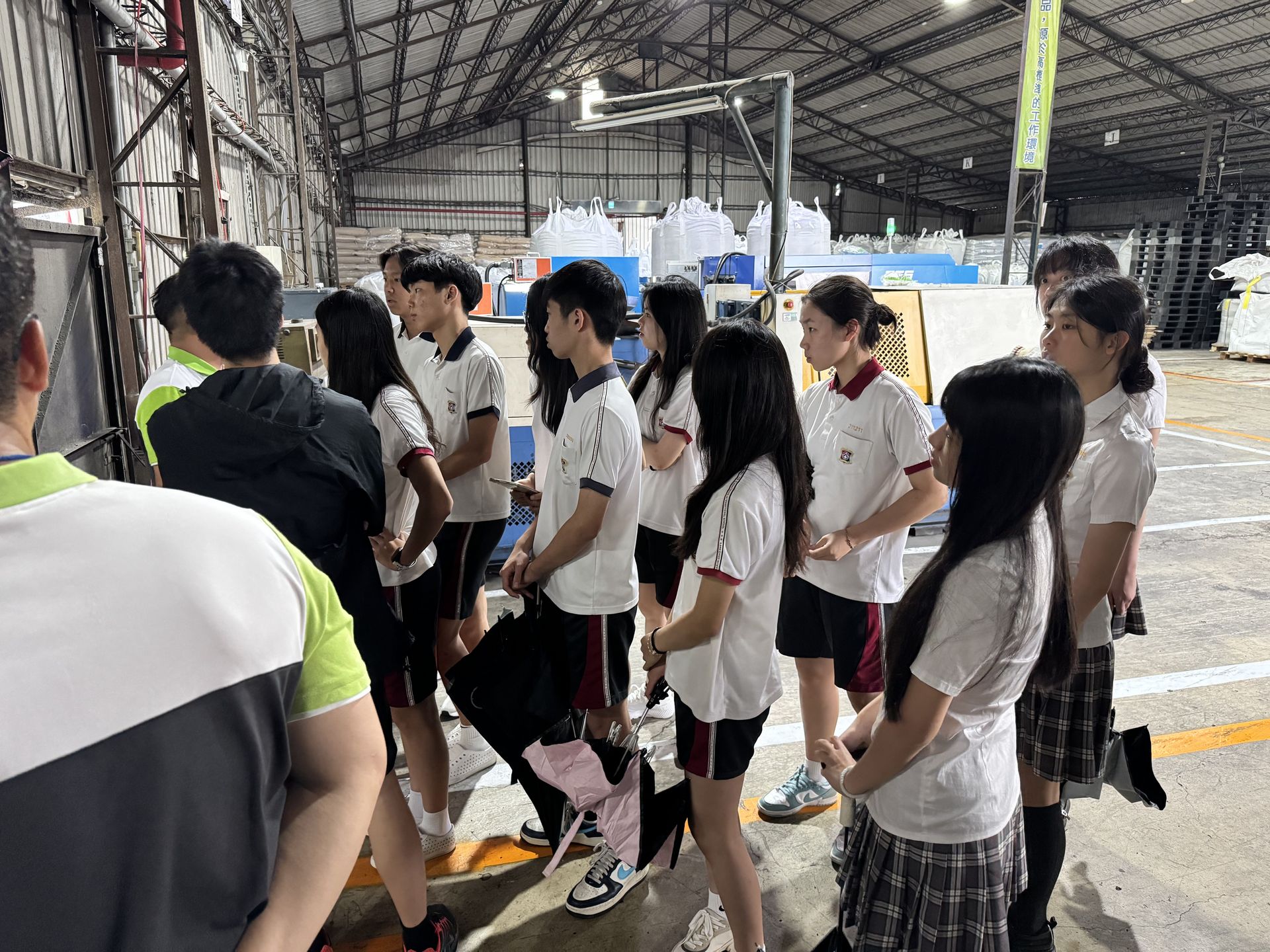
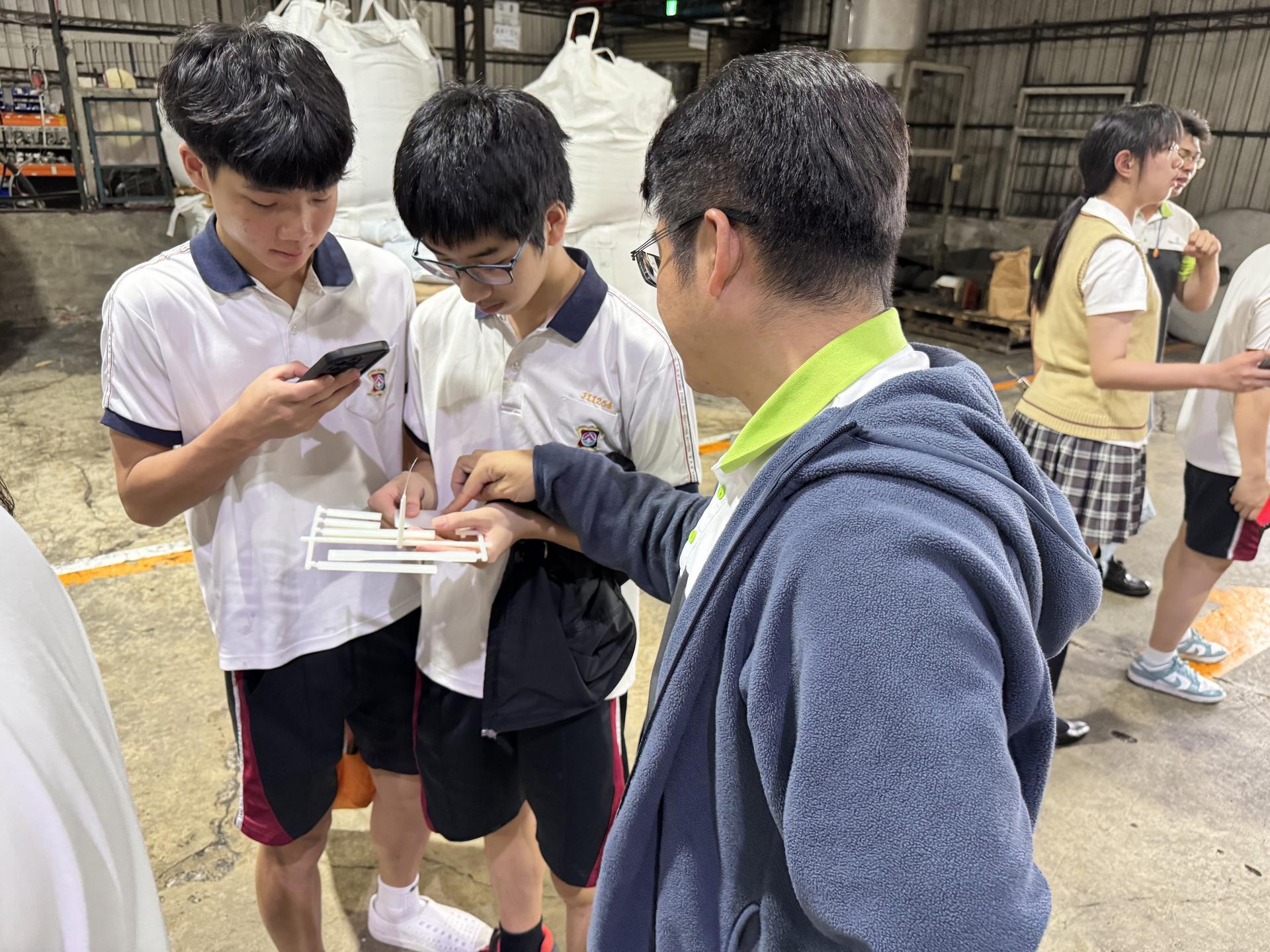
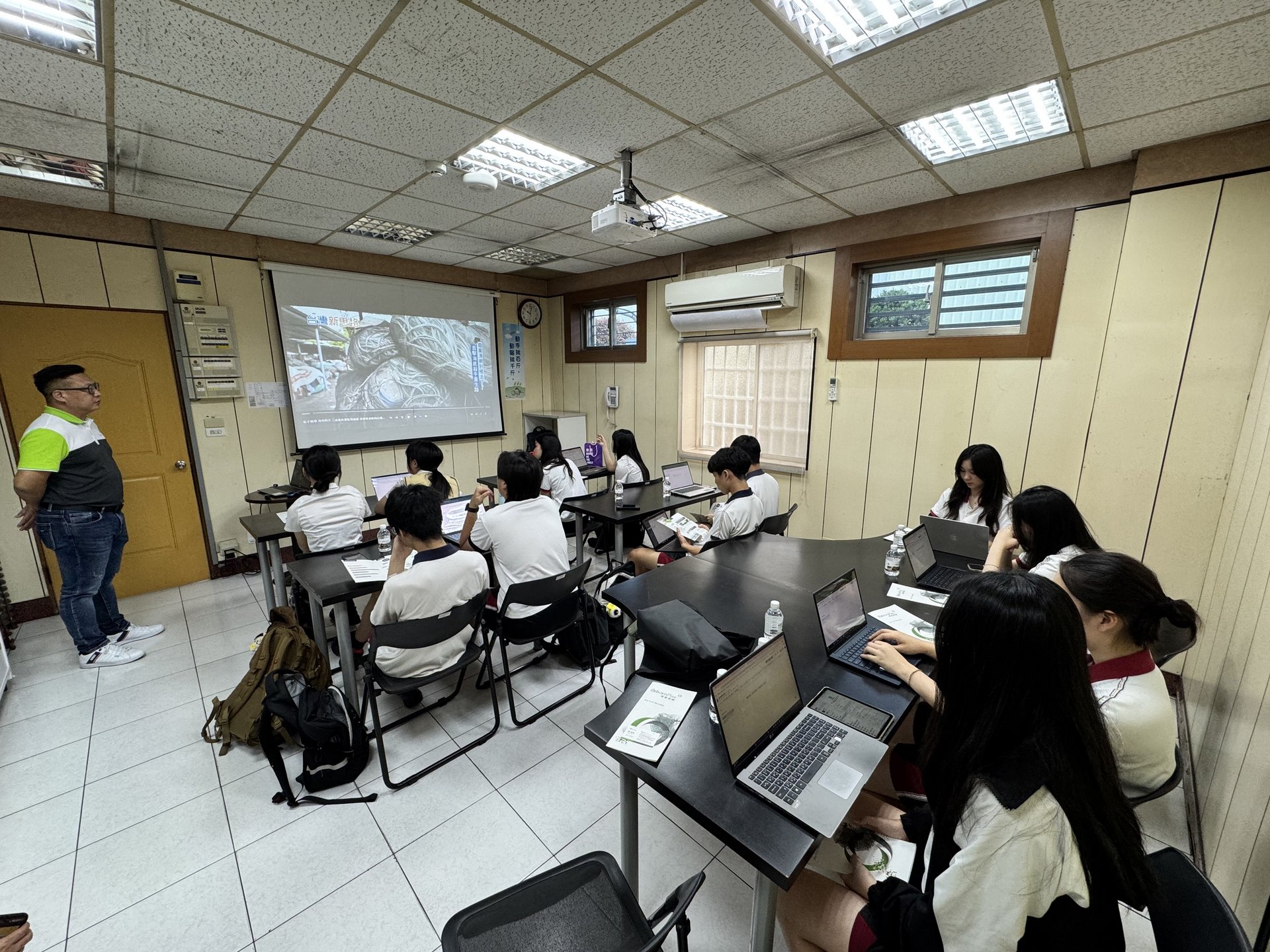
| Interviewee | RebornPlascompany | Authorized Photos, Primary source | 10% |
Atlas Copco. (n.d.). Bubble curtains: Silent guardians of our Oceans. https://tinyurl.com/5y3m3wch
Boflo, A. (2025, January 7). Case Study | Recycling Ghost Gear | Reclaim Plastics. wordpress-624066-3040333.cloudwaysapps.com. https://tinyurl.com/3ywar98n
Circular economy: definition, importance and benefits | Topics | European Parliament. (2023, May 24). European Parliament. Retrieved March 1, 2026, from
https://tinyurl.com/3y564h82
Dąbrowska, A., Szymiczek, M., Świątek, O., Chomiak, M., & Chmielnicki, B. (2025). The mitigation of the ghost nets threat by recycling of polypropylene: Blends, their ageing tests and spectral characterization. Cleaner Water, 4, 100126. https://doi.org/10.1016/j.clwat.2025.100126
Disadvantages of the linear economy. (n.d.). https://tinyurl.com/y3ztj2c3
Fisheries act 2018. The Outlaw Ocean Project. (2024). https://tinyurl.com/mr3ywvb4
Hunter, C., Skidmore, M., Locock, K., & King, S. (2023). Recycling pathways for ghost nets and other marine debris in Northern Australia. ResearchGate. https://tinyurl.com/3vvbzkya
Karadurmuş, U., & Bilgili, L. (2023). Environmental impacts of synthetic fishing nets from manufacturing to disposal: A case study of Türkiye in life cycle perspective. Marine Pollution Bulletin, 198, 115889. https://doi.org/10.1016/j.marpolbul.2023.115889
Leaper, R. (2019). The role of slower vessel speeds in reducing greenhouse gas emissions, underwater noise and collision risk to whales. Frontiers in Marine Science, 6. https://doi.org/10.3389/fmars.2019.00505
NonPoint Source: Pollution Tutorial. (n.d.). NOAA's National Ocean Service. Retrieved March 1, 2026, from https://tinyurl.com/4u5yw22w
Ocean pollution and marine debris | National Oceanic and Atmospheric Administration. (n.d.). NOAA. Retrieved March 1, 2026, from https://tinyurl.com/9zwxrdp6
Santos, B., Araújo, J., Carvalho, B., Cotrim, C., Bernardino, R., Freitas, F., Sobral, A. J. F. N., & Encarnação, T. (2025). Bioremediation of Synthetic Wastewater with Contaminants of Emerging Concern by Nannochloropsis sp. and Lipid Production: A Circular Approach. Bioengineering, 12(3), 246. https://doi.org/10.3390/bioengineering12030246
The Circular Economy | Definition & Model Explained. (n.d.). Ellen MacArthur Foundation. Retrieved March 1, 2026, from https://tinyurl.com/2wzww87p
Thomas, B., & Thomas, B. (2023, June 6). Ghost nets are a multidimensional threat. Eurofish. https://tinyurl.com/6e573ttw
Top five threats to life in the ocean. (2025, May 1). International Fund for Animal Welfare. Retrieved March 1, 2026, from https://tinyurl.com/56vnd8kw
What is marine debris? (2024, July 8). NOAA's National Ocean Service. Retrieved March 1, 2026, from https://tinyurl.com/2m2fwwzh
Wright, R. J., Erni-Cassola, G., Zadjelovic, V., Latva, M., & Christie-Oleza, J. A. (2020). Marine plastic debris: A new surface for microbial colonization. Environmental Science & Technology, 54(19), 11657–11672. https://doi.org/10.1021/acs.est.0c02305
億薈塑膠 (消費後再生塑膠材料,海廢、減碳、G R S). (n.d.). https://tinyurl.com/r6cvue96