Development of Green Energy
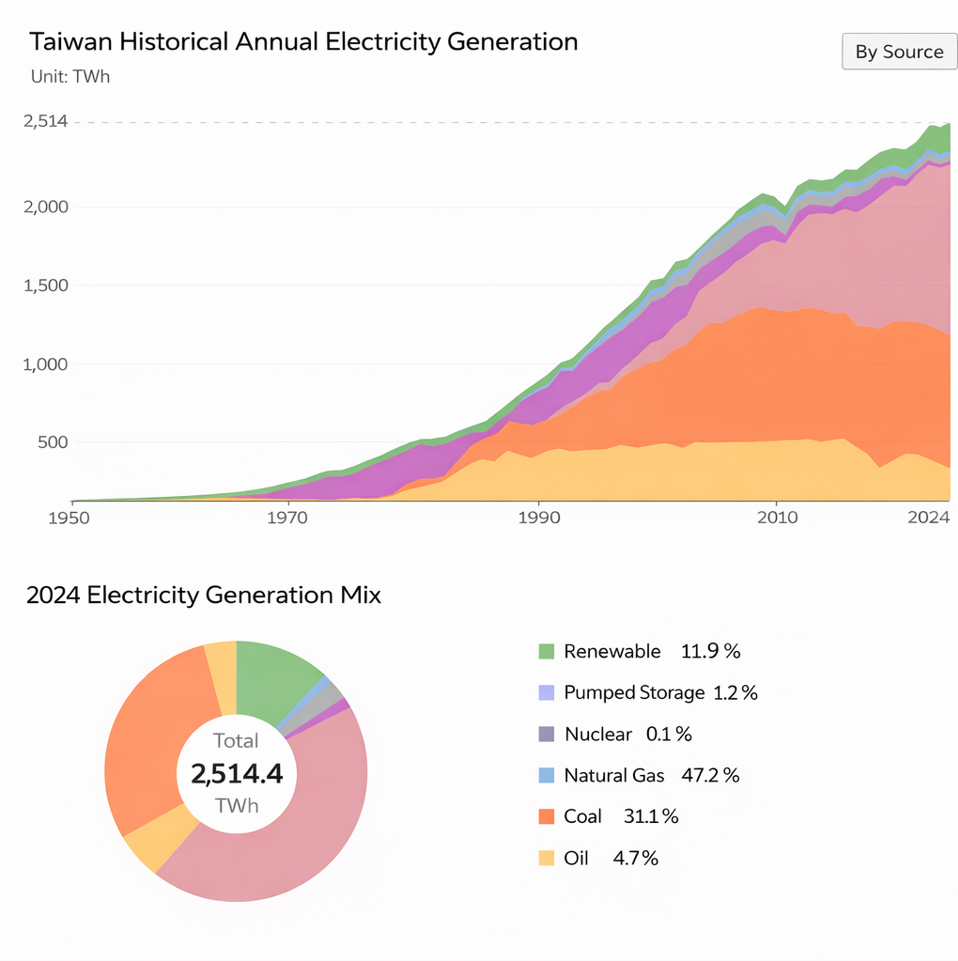
In order to decrease its reliance on fossil fuels, Taiwan has been investing more in green energy in recent years. The government has encouraged the increase of renewable energy sources, such as solar energy, wind energy, and hydroelectricity, including a few geothermal energy sources. The charts show that Taiwan’s development of green energy has grown steadily over the last couple of decades. Even though fossil fuels remain the country’s main electricity producer, the role of renewable energy in Taiwan's energy generation has increased significantly. From the line chart, the green portion of the graph in 2024 (renewable energy) is much more visible compared to previous decades, such as 1970, 1990, and 2010. In addition, as demonstrated from the pie charts, the percentage of renewable energy in 2024 takes up 11.9% of Taiwan's power generation, which is a significant increase from 2000 when renewable energy only took up 2.9% of the total power generation (Taiwan Power Company). The rise comes mainly from the expansion of solar power and offshore wind projects, supported by government policies and increasing public awareness of environmental issues, such as setting a target to reach carbon neutrality by the year 2050 (Ministry of Foreign Affairs). While natural gas and coal still make up most of the energy supply, the gradual increase in the green section of the chart displays that Taiwan is moving toward a cleaner, sustainable energy system and increased energy security.
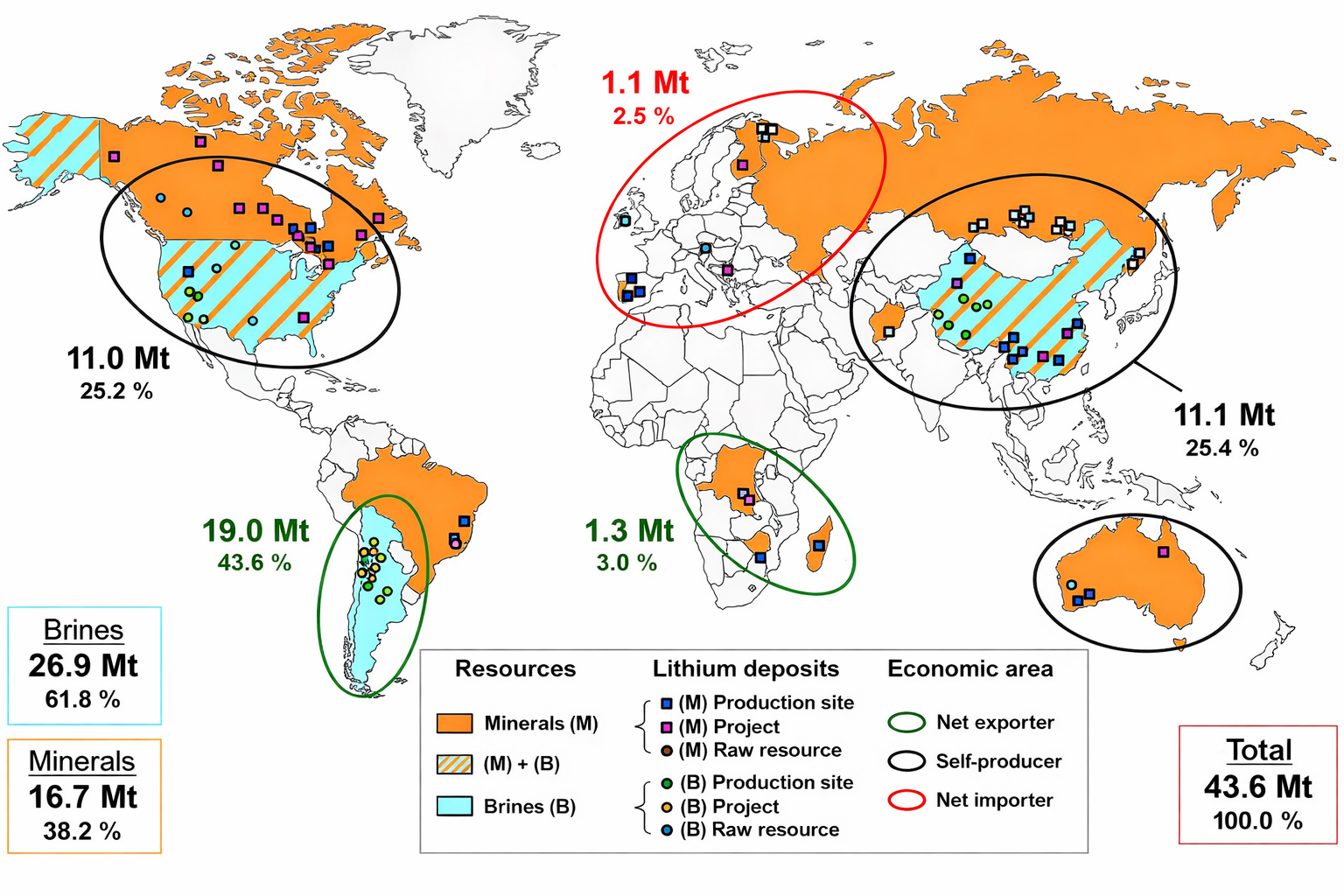 asis is determined by brisk alterations of trade relations and tariffs. The sharp elevation of prices in the spring of 2025 has more than blown trading outposts, posing serious threats to the electrical and electronics sector. Trump's sanctions have slapped tariffs on complete electronic products but not raw materials. However, the supply chain is creating ripple effects in the market. The supply chain has affected all types of technology, including energy storage mechanisms. Although the U.S. has imposed strategic sanctions on the energy market, they have increased the value of U.S. energy, causing prices to rise. The inflation made the U.S.'s energy security extremely vulnerable, resulting in a decline in manufacturing. U.S. tariffs have led to reduced production and energy scarcity, underscoring the critical role of energy storage resilience during economic disruptions. Countries like South Korea and China are heavily reliant on energy storage and batteries in times of crises. China has been increasingly leading in energy storage, partnering with allies to acquire rare earth minerals (REMs). In the foreseeable future, the U.S., along with its allies, should drastically advance in the energy storage and battery domains, boosting its flexibility to adapt to various energy crises.