Basic Information

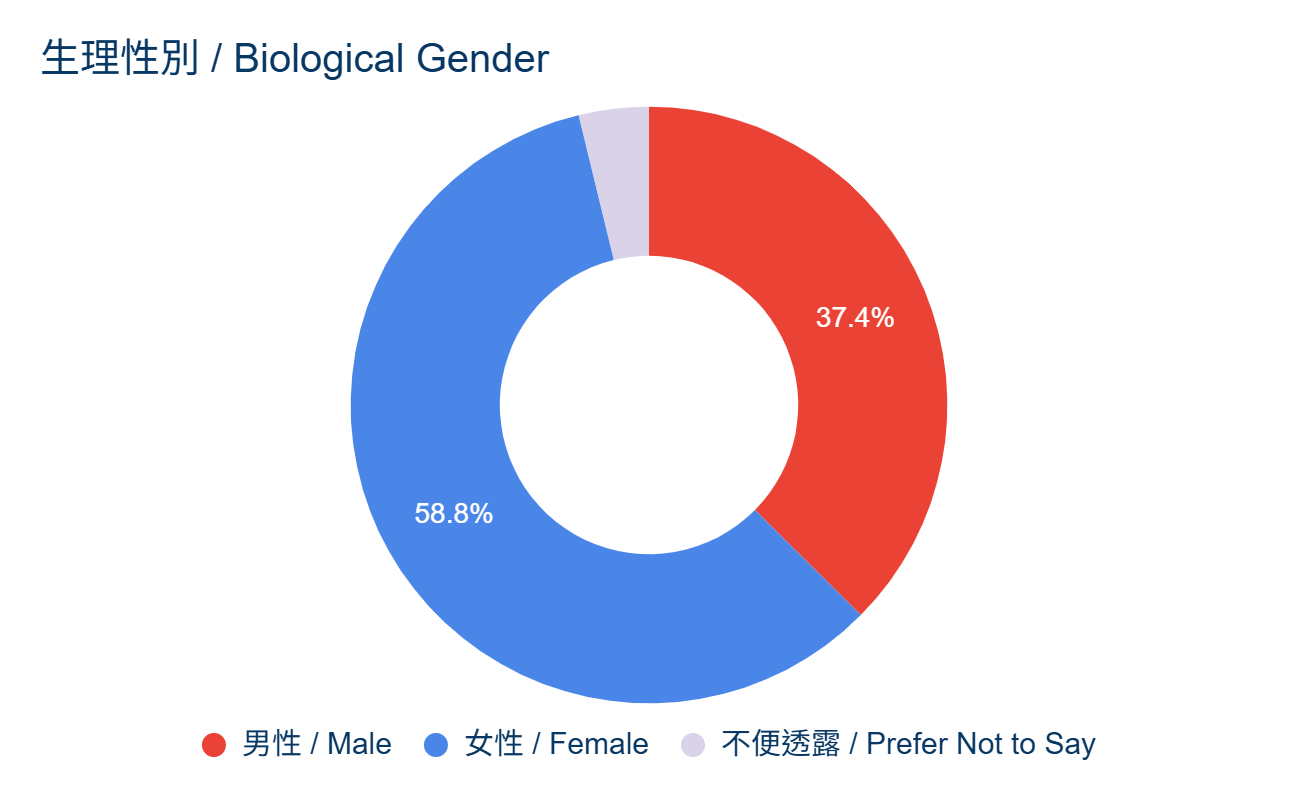
Q.1 Biological Gender

The illustration highlights the correlation between biological sex, where 58.8% were identified as females and 37.4% were males. Though biological gender does not directly determine the responses to the following questions. Nevertheless, the inquiry indicates that males participate more in environmental dilemmas than males do.

Q.2 Age

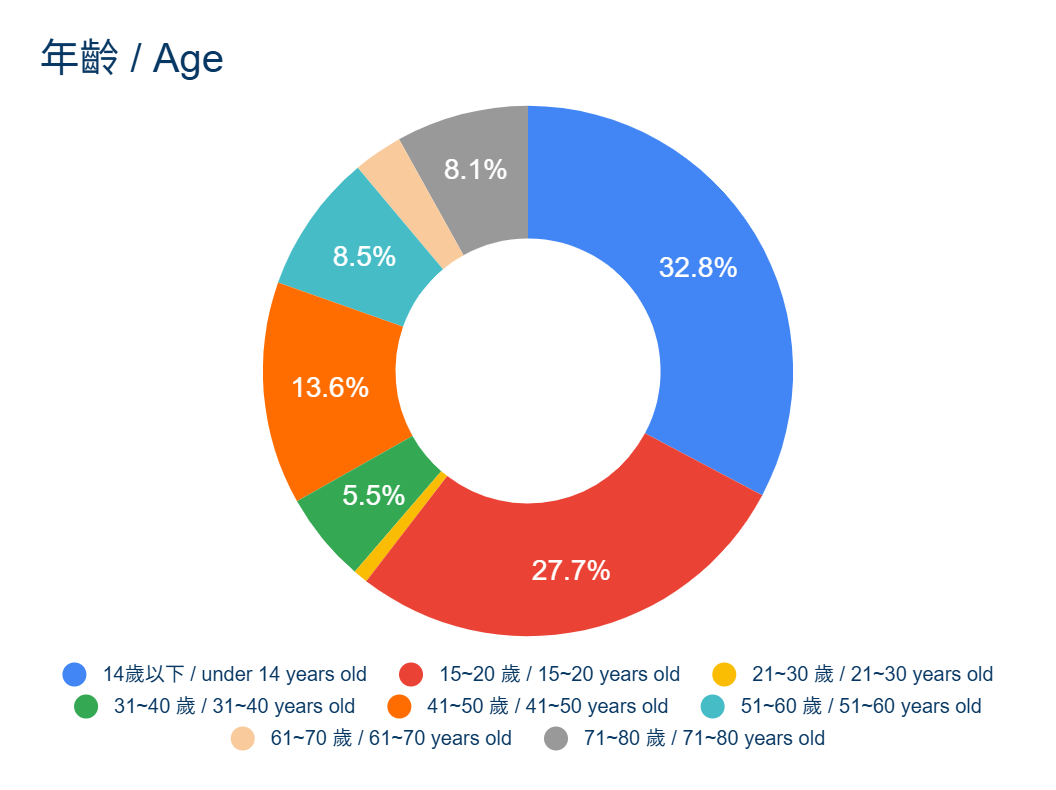
From this chart, it can be observed that approximately 32.8% of our audiences are 14 years old or below, while 27.7% fall within the 15~20 age range. This distribution indicates that the majority of the participants are adolescents. As the survey was sent through the school email system, junior and senior high students are more likely to access and complete the form. Understanding the age profile of respondents is essential, as age influences exposure to energy-related topics and shapes perception formed largely through education, rather than professional or household experience. Therefore, subsequent responses primarily reflect the viewpoints of younger individuals.
Q3. Education Background Information

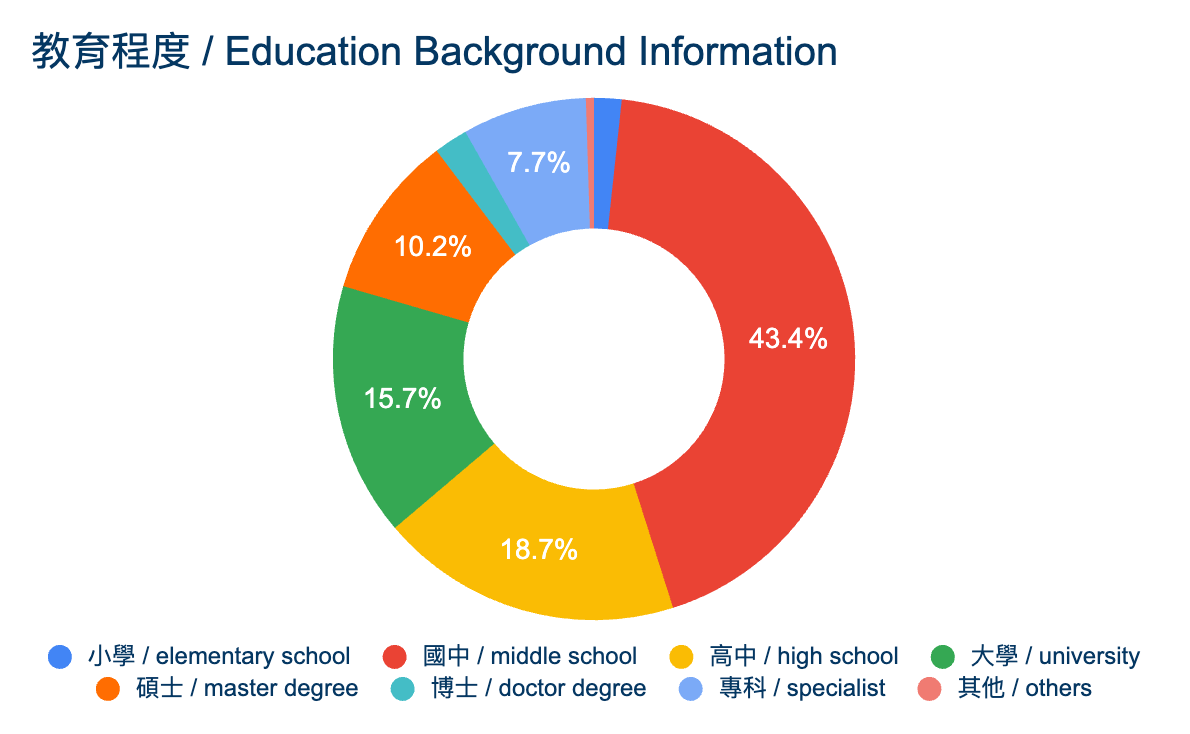
According to the pie chart, over half of the respondents’ educational level lies in the junior high school category, accounting for over half of the total. Although there is no significant correlation between the respondents’ educational background and their respective replies, a notably higher participation rate among junior high students was evident. This trend may be attributed to the integration of environmental awareness themes in the school’s curriculum, which encourages students’ engagement in topics relating to current environmental challenges faced globally.
Q4. Occupation 

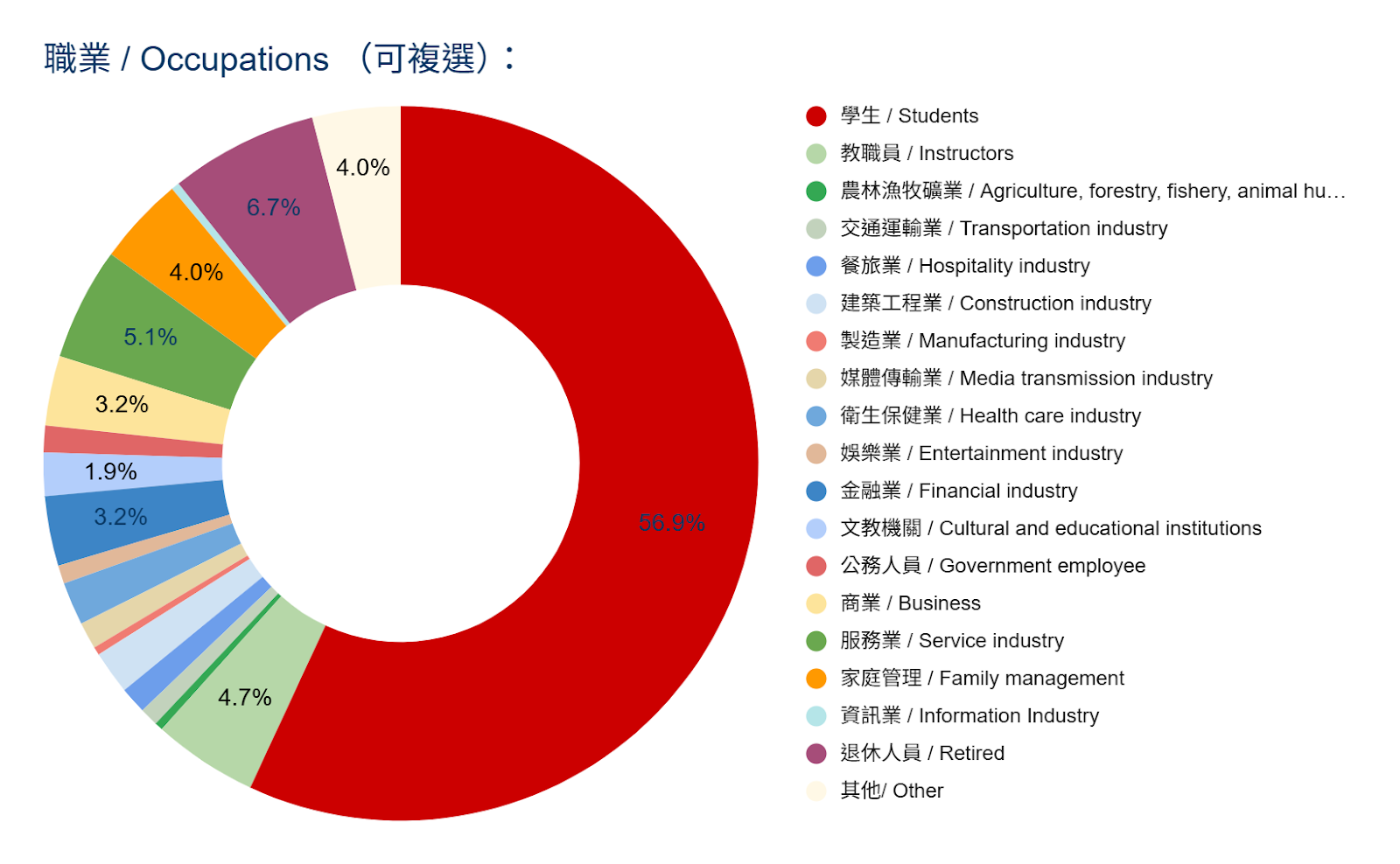
The diagram illustrates that students form the major occupational group among respondents, constituting the largest segment with a percentage of 56.9%. Although there is no correlation between the respondents’ occupation and their respective replies, the dominance of students can be explained by the survey’s distribution method and the school, as well as the growing emphasis on environmental issues in education. Increased exposure to topics such as climate change, renewable energy, and sustainability has heightened students’ interest and willingness to explore related issues. 
Energy Storage Awareness

Q.1 Have You Heard of Energy Storage System (ESS)?

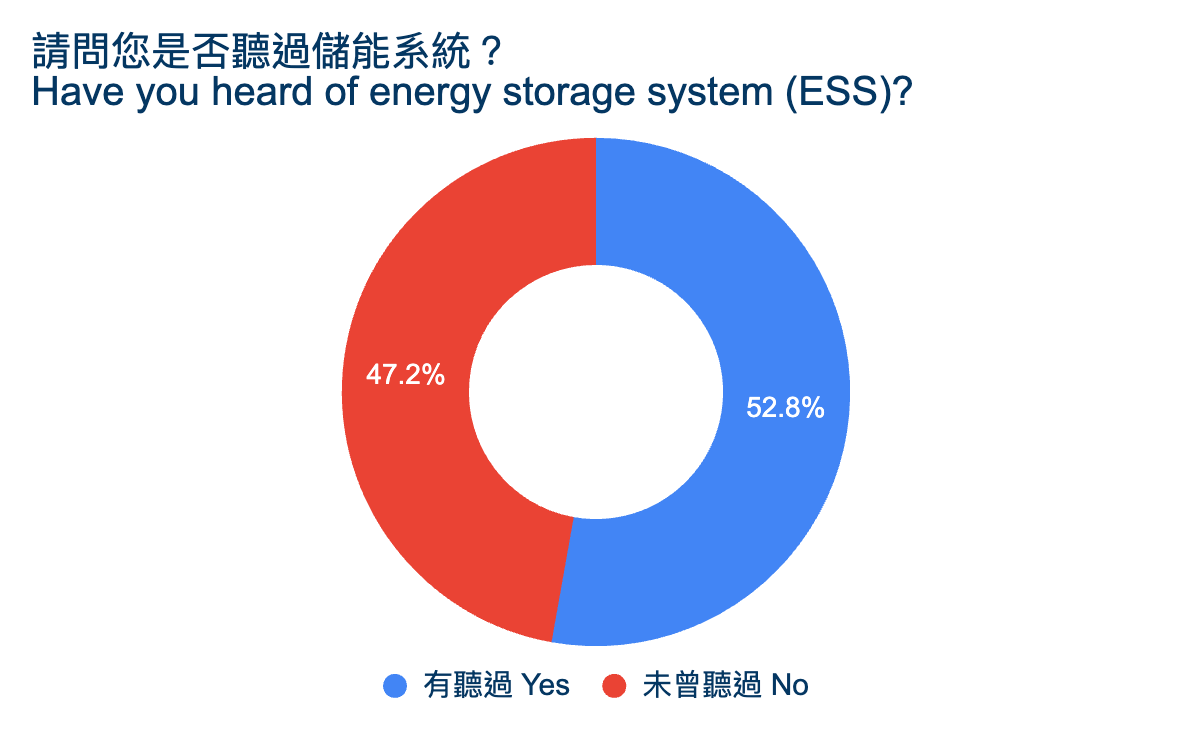
The following illustration demonstrates the equivalent percentage among respondents regarding the understanding of energy storage systems. With 52.8% of respondents recognizing the energy storage system (ESS) and 47.2% of respondents unaware of the existence of the energy storage system, the result markedly highlights the lack of noticeability of the energy storage system. As a prominent and critical developing technology, essential for grid stability, integrating renewable energies, and global energy transition, its explosive commercial growth drew attention in engineering and policy. Therefore, the obliviousness corresponds to the complexity of the battery structure, detached from average citizens or involvement in high investment. Furthermore, energy storage systems were frequently hidden (in solar farms/data centers) and facing technical hurdles, namely material scarcity and safety concerns, despite their critical role in renewables and furnishing back-up energy.

Q.2 What is Your Opinion Towards Taiwan's Current Power Supply?

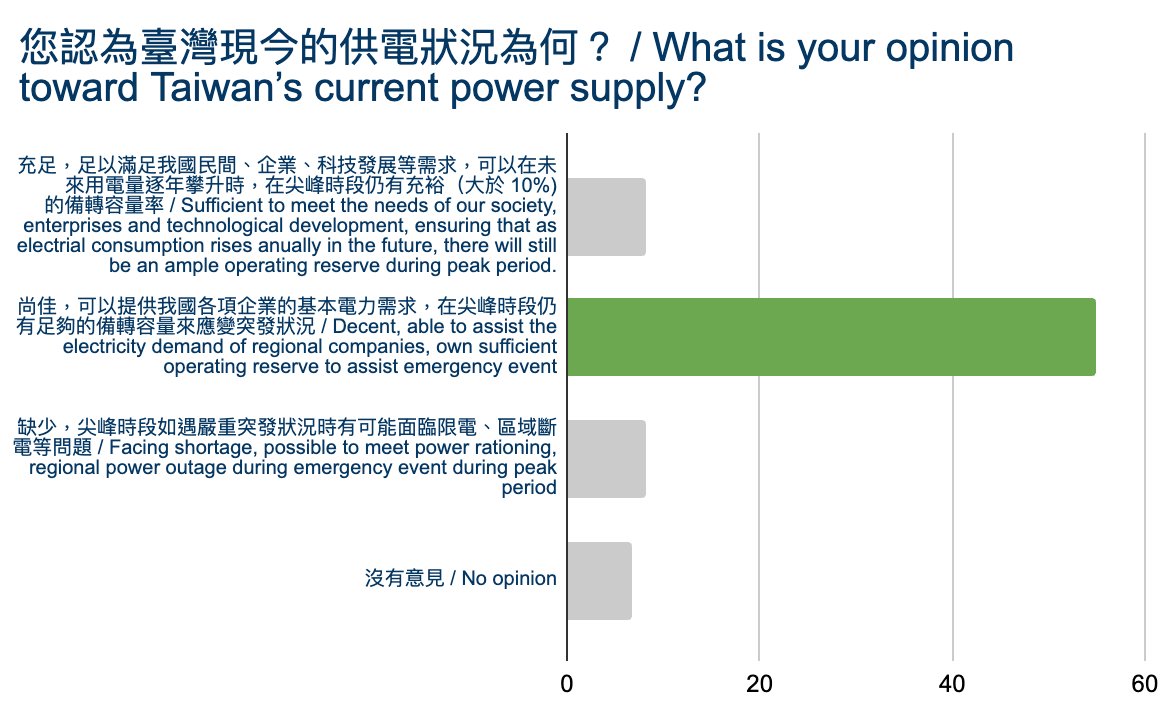
The question evaluates the public’s perception of Taiwan’s potential energy shortage, collecting information on the matter of an average Taiwanese’s assumption of Taiwan’s current power supply. According to the illustration of the diagram above, respondents who believed the nation’s current power supply is adequate comprised a significant proportion of the diagram, standing at 54.9%.This dominance of the sector indicates that the majority of the public perceived the nation as capable of meeting its demands. Such confidence implies a belief that existing energy infrastructure and storage capacity are sufficient to withstand external distributions, including natural disasters or supply interruptions. However, this perception may underestimate underlying challenges such as dependence on energy limits and limited reserve capacity.  

Q3. ​Follow Up: What Technique Has Taiwan Adopted to Escalate Electricity Production?

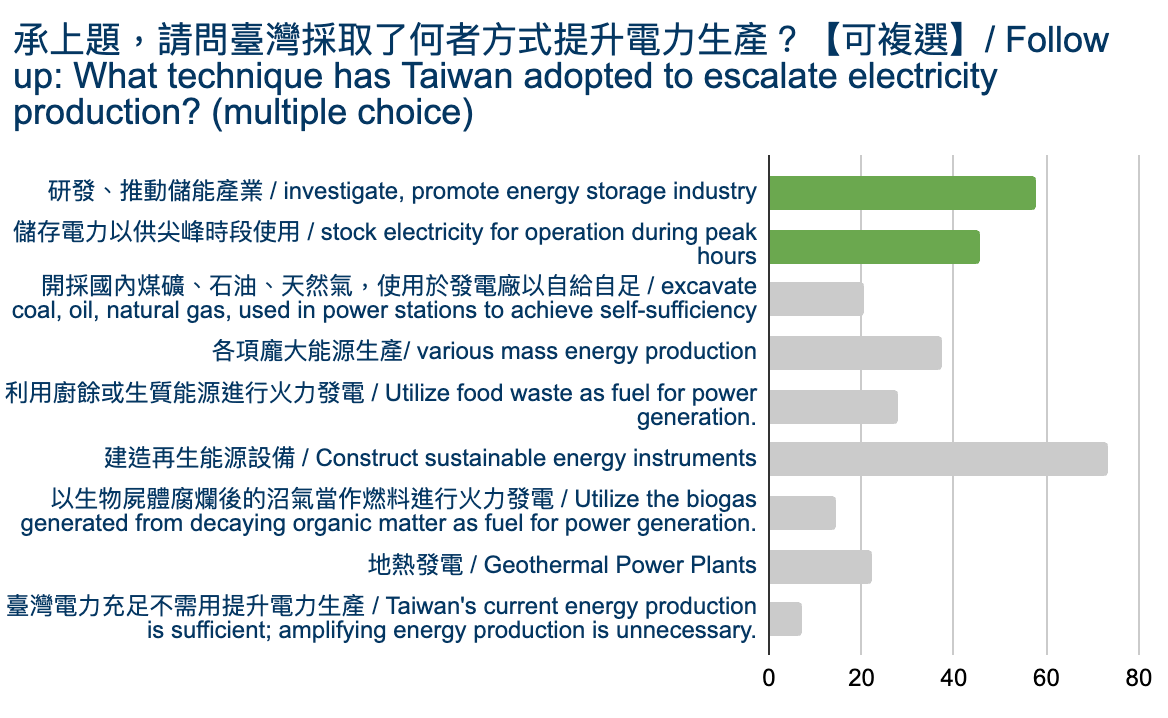
The illustration queries respondents’ understanding regarding Taiwan's measures to reduce the load on its power system. As illustrated in the chart, the most frequently selected options relate to the development and promotion of the energy storage industry, and storing electricity for use during peak demand periods, indicating a relatively high awareness of energy storage-based solutions. This suggests that respondents are increasingly familiar with the role of energy storage systems in balancing supply and demand, particularly during periods of high electricity consumption. In contrast, options involving methods of traditional fossil fuel extraction and mass energy production methods received moderate selection rates, reflecting an understanding that these methods continue to contribute to Taiwan’s energy supply, though they may not be perceived as long-term or sustainable solutions. Meanwhile, renewable-based approaches, such as constructing sustainable energy facilities, biogas power production, and geothermal power plants, were selected less frequently. This indicates limited public awareness of the diversity and practical implementation of alternative energy technologies currently being explored or developed. 

Q4. Which of the Following Do You Think Is the Green Energy Development Trend in Taiwan? 

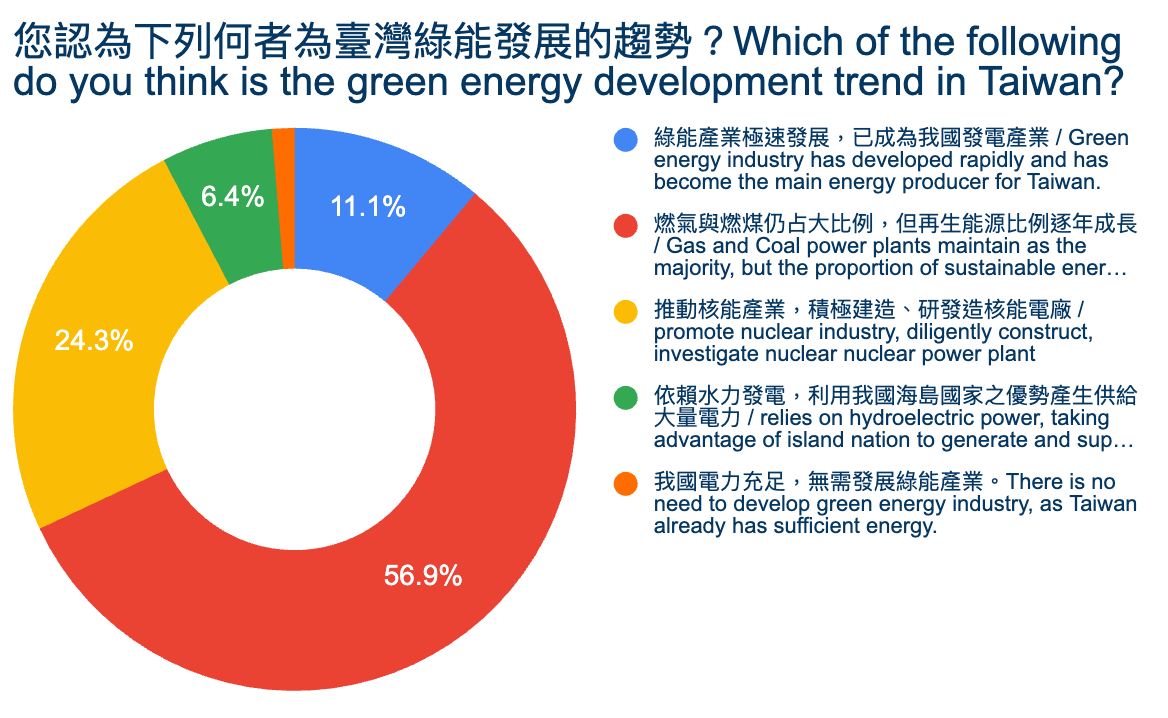
The chart above demonstrates public opinion on the green energy development trend. The majority of respondents (56.9%) believe Taiwan still relies heavily on coal and gas power plants, while the proportion of sustainable energy is gradually increasing. The nuclear industry placed second owned percentage of 24.3%, whilst renewable energy was presented third with 11.1% of the population viewing it as the future trend in Taiwan. The result indicates Taiwan still relies heavily on coal and gas power plants, where traditional energy sources dominate the energy field. Although the proportion of sustainable energy is perceived to be gradually increasing, renewable energy is not yet viewed as a leading power source. Underestimating future green energy development could be attributed to its high upfront cost associated with renewable energy infrastructure. Without adequate energy storage capacity to ensure a stable and reliable power supply, coal and gas power plants continue to play a critical role. Overall, the results suggest that while the public recognizes progress in the renewable energy fields, concerns remain about the pace of transition and insufficient integration of energy storage systems.

Q5. What Is Your View on Investing in the Energy Storage Industry? 

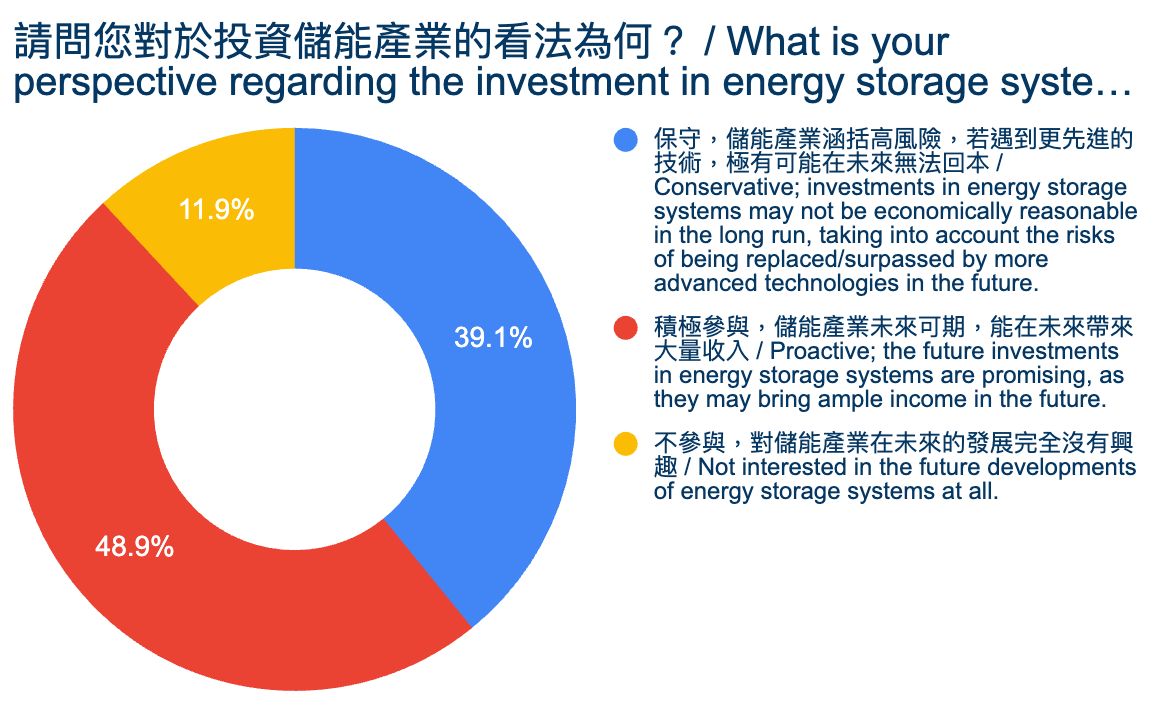
This chart demonstrates the public view on investing in the energy storage industry. According to the chart illustrated above, 39.1% of the respondents are conservative, 48.9% are proactive, meanwhile 11.9% are not interested in investing in the energy storage industry. The high proportion of proactive respondents suggests optimism about the future potential of the energy storage sector, particularly as it plays a key role in supporting renewable energy integration and grid stability. On the other hand, the sizable conservative group indicates concerns due to its high initial investment costs on infrastructure, technological uncertainties, and unclear policy support. These factors discourage immediate investment and lead investors to a wait-and-see approach to the investment. As a result, although the majority of the population presented a positive perspective, cautious investment behavior could slow the pace of industry expansion in the short term.

AUROSI Precision

Q.1 Have You Ever Heard of AUROSI Precision?

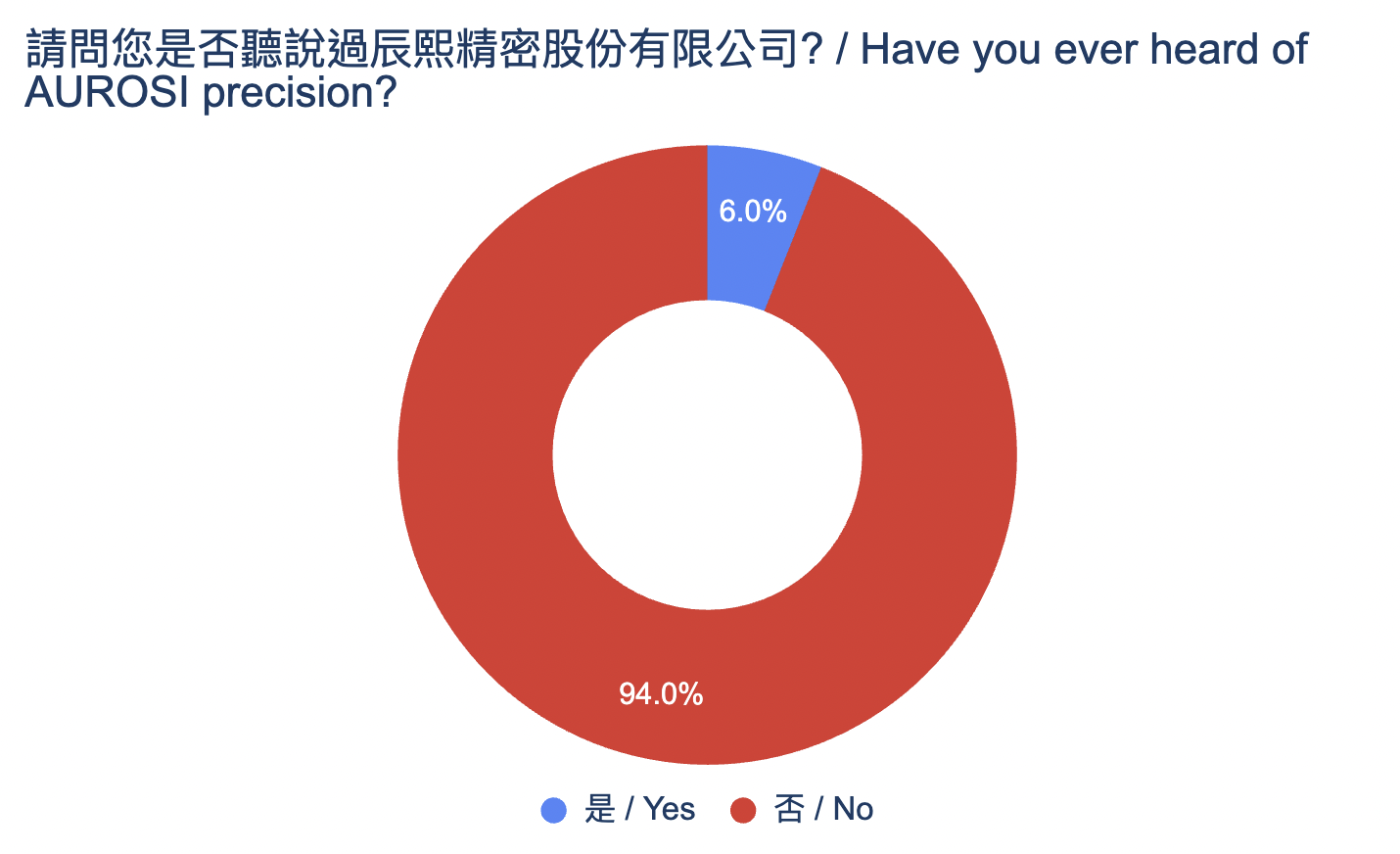
The chart illustrates that only 6% of the respondents have previously heard of AUROSI precision, whereas 94% are unfamiliar with the company. This significant imbalance highlights AUROSI’s low level of public recognition among the surveyed population. The lack of awareness indicates limited exposure through mainstream or educational channels. As a result, improving marketing strategies and strengthening public communication may be necessary for AUROSI to increase visibility and establish stronger brand recognition. 

Q.2 How Did You Noticed AUROSI Precision?

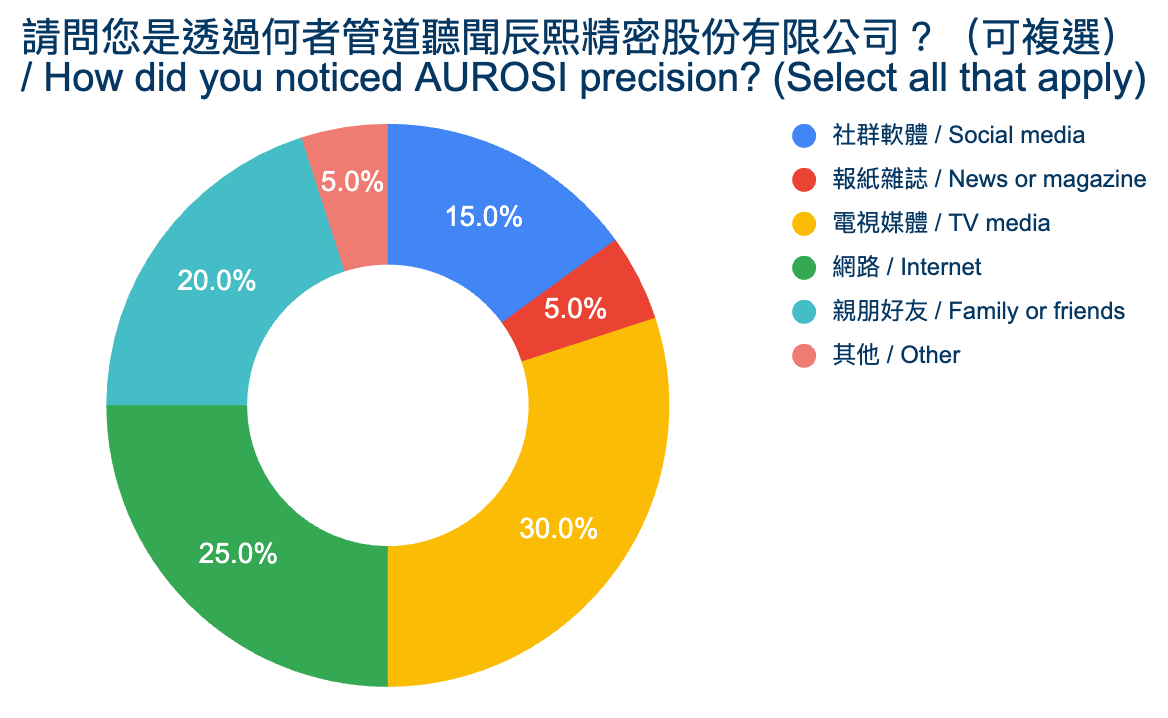
The illustration above demonstrates the technique the respondents were introduced to AUROSI Precision. The largest proportion of respondents (30%) reported learning about AUROSI via television media, followed by the internet at 20%, while family or friends accounted for 20.0%. These findings indicate that television remains the most influential channel for reaching the audience, although digital platforms also serve a significant role in disseminating information. The combined influence of the internet and social media highlights the growing importance of digital media in awareness creation. Therefore, AUROSI’s promotional strategies can continue to utilize television while also strengthening online and social media presence to maximize outreach and engagement.

Q3. ​To What Extent Are You Familiar With AUROSI Precision? 

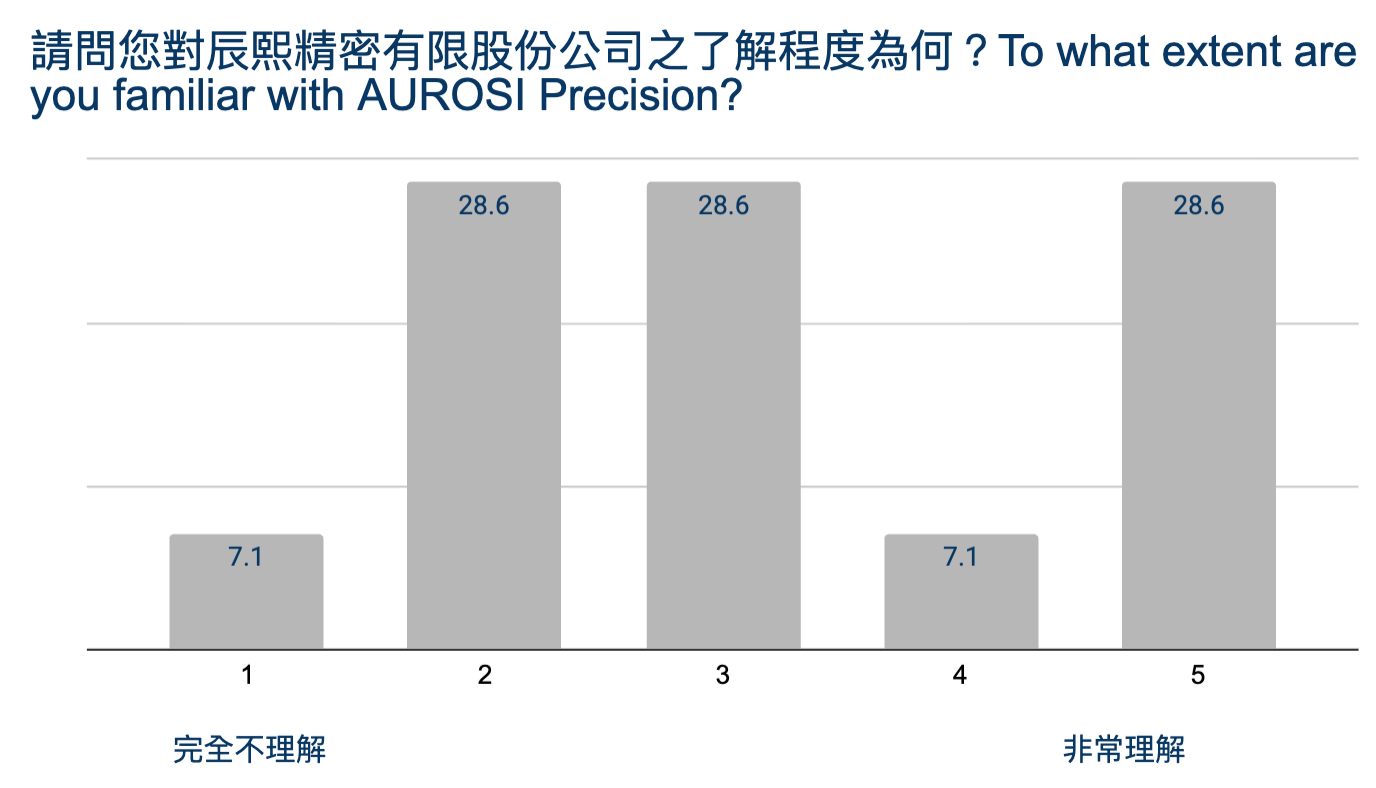
This graph demonstrates varied levels of familiarity among respondents regarding AUROSI Precision. According to the bar graph illustrated above, most of the responses are concentrated at levels 2,3, and 5, each accounting for 28.6%. This spread indicates an uneven understanding of the company. While a small portion of respondents demonstrates strong familiarity, most possess only moderate or limited knowledge. This suggests that although AUROSI has some degree of exposure, the information available to the public may lack depth or consistency of public visibility. 

Opinions of Energy Storage

Q1. ​Which of the Following Sustainable Development Goals Do You Think Energy Conservation Systems Help Accomplish? 

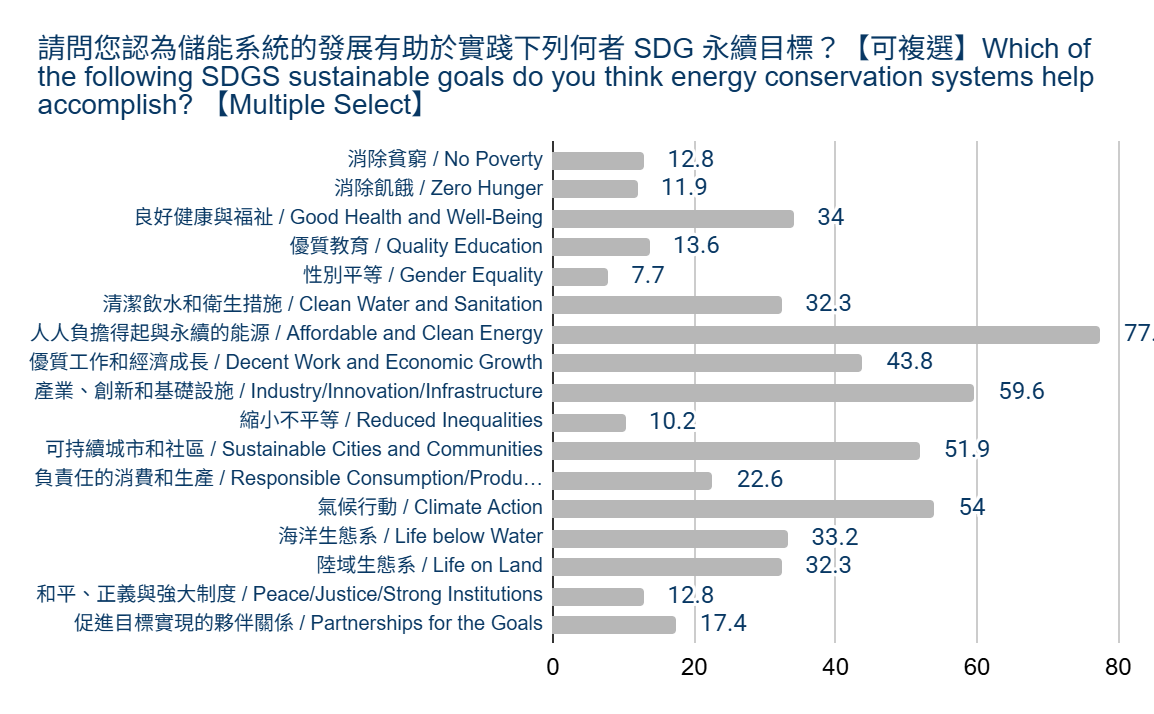
This question reveals the respondent’s opinion of energy conservation systems regarding the value it adds onto accomplishing SDGs. Based on the statistics, 77%agree that energy conservation systems are related to SDG7: affordable and clean energy. Affordable and clean energy focuses on access to reliable, sustainable power, primarily through renewables like solar and wind, which are increasingly cost-competitive. Nevertheless, people put strong awareness and participation in the development of renewables to provide an abundant electricity supply while minimizing the cost it has on the environment for clean and affordable energy. Beyond SDG 7, respondents also linked energy storage to broader environmental SDG goals. For instance, SDG 9: Industry, Innovation and Infrastructure, with 59.6% placed second through providing consistent energy sources, which accelerate industrial, innovation, and infrastructure growth by enhancing renewable integration, grid stability, and electric mobility.

Q2. To What Extent Do You Believe Promoting Sustainable Energy Storage Helps Address Energy Shortages and Environmental Issues Today?

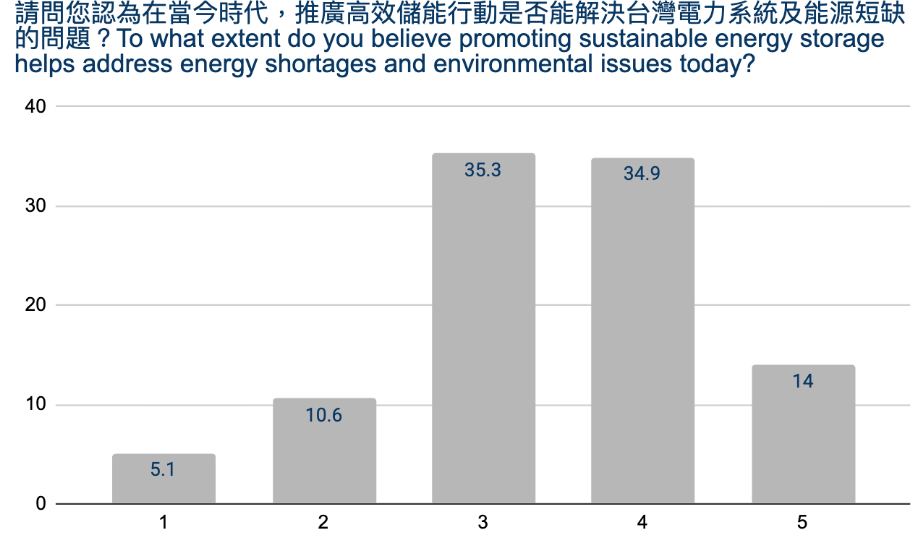
This question evaluates the respondent’s perception of the extent to which promoting sustainable energy storage can address current energy shortages and environmental issues.
According to the graph, responses are heavily concentrated in the moderate to high effectiveness range. Among the 235 respondents, only 83 individuals (35.3%) selected moderate effect (3), while 82 individuals (34.9%) selected major effect (4), with only 1 respondent's difference between the two. This nearly equal distribution indicates a strong consensus that energy storage plays a prominent role, though it is not perceived as a complete solution by the public. Notably, only 33 respondents (14%) selected significant effects (5), suggesting that relatively few participants believe energy storage alone can resolve both energy storage and environmental challenges. This restraint implies an awareness of current limitations, such as technological constraints, immense infrastructure costs, and continued reliance on fossil fuels. Overall, the results suggest that the public largely recognizes the significance and value of sustainable energy storage systems in improving energy efficiency and reducing environmental impact, while acknowledging its limitations as a developing technology.

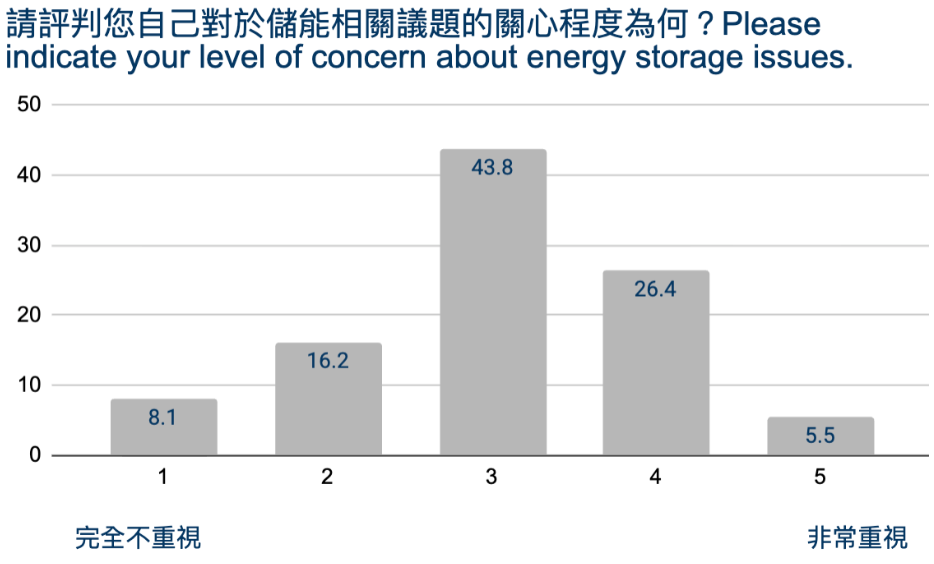
Q3. Please Indicate Your Level of Concern About Energy Storage Issues.

Based on the diagram, respondents demonstrate a moderate awareness of energy storage issues. The largest proportion of participants selected level 3 (moderate concern) at 43.8%, indicating that nearly half of the respondents are aware of energy storage issues yet may not have taken action. Meanwhile, some respondents have greater concerns relatively, with 26.4% selecting level 4 and 5.5% selecting level 5. This implies that approximately one-third of the respondents believe energy is a notable issue. On the other hand, 24.3% respondents care less about energy storage, indicating that relatively few participants are disengaged from energy storage issues. The trend highlights the importance of escalating promotion and acknowledgement of the energy storage dilemma in order to reduce reliance on polluting fossil fuel plants as the global warming issue is escalating.