




Marine threats &more
What are the most common causes for our marine life to be in danger? How can we solve the problem?
What are the most common causes for our marine life to be in danger? How can we solve the problem?
Approximately 71.25% of the world's surface area is covered by marine environments, and is home to about 90% of the world's known species on the planet. Regardless of the massive capacity and variety of marine ecosystems in the ocean, marine threats still occur and constantly devastate marine species and worsen the planet’s health.
The first kind of marine threat is the most well-known and ultimately a severe global issue. Environmental pollution is the introduction of hazardous substances or energy into a certain environment, which may have negative effects and harm to the environment, which may lead to undesirable consequences to humans, animals, and plants. Environmental pollution includes nonpoint source pollution, which is how water or natural elements absorb pollutants and inevitably carry them into the ocean. Furthermore, littering and emitting synthetic hazardous substances into the environment also account for a great majority of environmental pollution.
Moreover, the concept of overfishing is how the demand for fishing and capturing marine animals for entertainment or economic purposes increases so that the replenishment of the fishing stock cannot catch up with the catching rate.
Furthermore, ocean noise and vessel strikes are extremely dangerous for marine life. Ocean noise is loud noises composed by cargo ships, motorboats, and oil rigs. These transportational facilities may generate loud volumes that may impact marine mammals like dolphins and whales, which mainly use their voice for locomotion. On the other hand, vessel strikes are collisions between large marine mammals and cargo ships; these kinds of collisions may result in severe injuries to large marine species.
Lastly, the problem of global warming and rising temperature on the average ocean surface, and gradually melting of icebergs. Global warming is a well-known phenomenon in this world that many educational institutions and websites already use SDGs or educational media to showcase the problem. Basically, the trapped carbon dioxide inside the atmosphere gains weight and increases the overall temperature of the environment, including melting icebergs, rising sea levels, and warm ocean temperatures.
The effect of the causes on marine environments can be varied through multiple factors mentioned above(2.1). Yet the effects of marine devastation basically revolve around ecosystem harm, a decrease in biological diversity, and human health issues.
When pollutants are released into the ocean, marine animals may accidentally ingest those small pollutant particles as their prey. Usually, these pollutants are poisonous and harmful to marine organisms, leading to death, disease, or injury. These kinds of pollutants may also harm the environment itself, too. For example, oil or waste liquids may inhibit kelp’s growth or marine plants’ growth by covering the sunlight, limiting the nutrients they receive, which might affect small marine organisms’ diet.
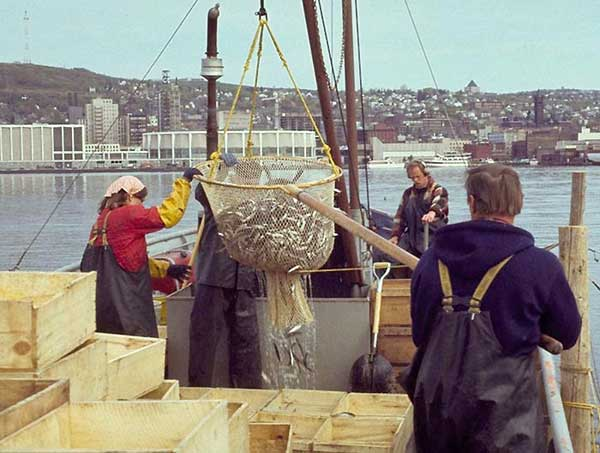
Moreover, overfishing is an easy concept to understand, which the effect of it to the marine environment is massive degradation on marine life and reduces biodiversity, also challenging the population’s limit from extinction. The devastation on the ecosystem may lead to unstable prey and predator relationships, further extinction due to loss of food source.
Furthermore, the effect of ocean noise and vessel strikes is a huge threat to large marine mammals like dolphins and whales. Since those organisms are large and mainly use sound rebound to locate themselves in the endless ocean. However, large noises above the surface of the sea may confuse them and suppress them. Meanwhile, vessel strikes have contributed to the decreasing number of whales, especially the North Atlantic Right whales; in 2025, there are only 370 of them in the wild.
Lastly, global warming facilitates the melting iceberg and the increase in water temperature on the ocean surface. The increase in temperature may lead to coral bleaching, damage to coastal ecosystems, and ocean acidification due to the rising sea level. These effects significantly impact marine health and may lead to severe environmental issues if we overlook any one of them.
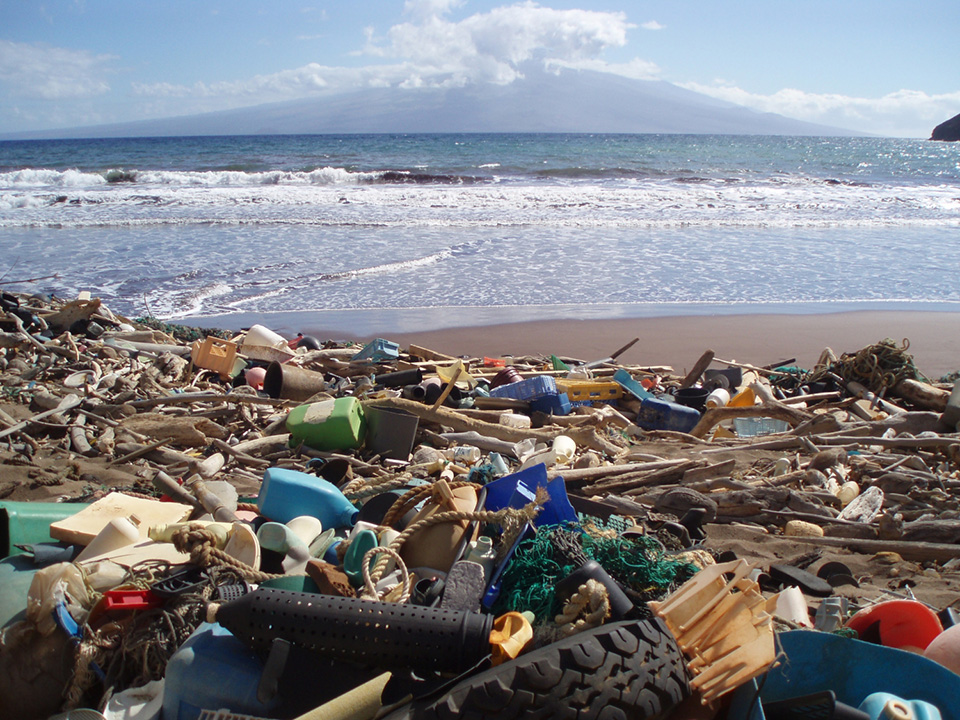
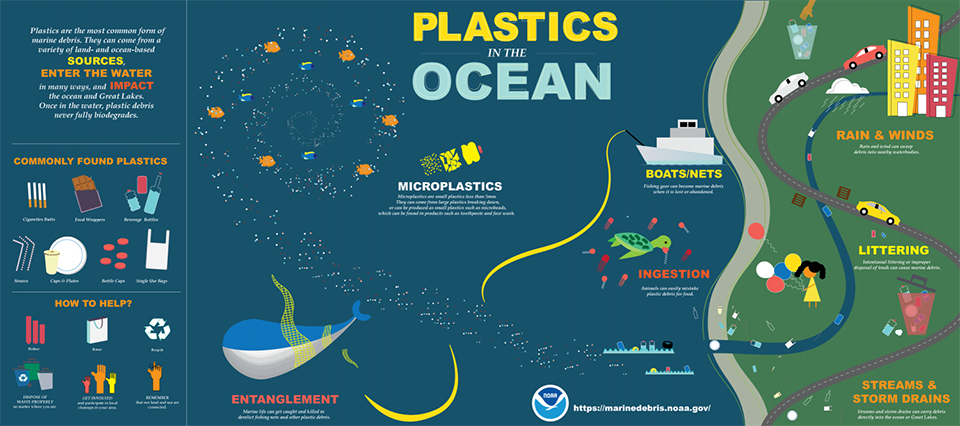
One of the most severe marine threats is marine debris. The definition of marine debris is any human-made material that has been littered into the ocean. Examples include plastics, fishing nets, metals, old tires, etc. Marine debris can be divided into 2 types: land-based and ocean-based debris. Land-based debris is waste that is produced on land, such as everyday trash. Winds can blow waste out of the trash cans and might carry these wastes into the streams or rivers, and finally flow into the ocean. Ocean-based debris is waste that is made from human activities on the sea, such as fishing gear or products that fall off the ships when transporting across the ocean. It is estimated that marine debris affects over 700 marine species, and there might be more. Marine animals might ingest marine debris and block their stomach, which causes the marine animals to become sick and starve.
Plastic is the most common type of marine debris, making up about 80% of marine debris.Plastic doesn’t degrade naturally like other materials, but instead breaks down into fragments called microplastics. Most of these microplastics are too small for humans to see with bare eyes, which makes it much more difficult to remove. Animals, such as fish, whales, zooplankton, or other marine wildlife, might identify these microplastics as food and ingest them accidentally.
Microplastics caused several negative impacts not only on marine life but also on humans. These microplastics can release chemicals and harm marine animals by causing reproductive or health problems. Then, we ingest these fish, meaning that microplastics can be transferred into the human body and affect our body health. The microplastics can also damage human health by causing problems such as cardiovascular diseases or hormone disruption.
First, there are currently different solutions to eliminate different types of pollutants. Initially, chemical pollutants can be addressed in different ways. Examples include bioremediation, which is a method that uses bacteria to break down or absorb the toxic chemicals in the ocean; global treaties, which restrict the amount of chemical pollutants flowing into the ocean; and wastewater treatment plants, which remove toxic chemicals from industrial wastewater before flowing into the ocean. Next, oil pollution can be caused by oil spills from ships, and can be addressed by containers that prevent oil from spreading, bioremediation that degrades the oil, and chemicals or sorbents that help bacteria to degrade faster. Lastly, marine plastic debris can be solved through various methods, including several systems such as floating barriers that directly collect and gather plastic debris on the ocean, and microbes and enzymes like PETase which degrade plastics. And the easiest and simplestest way to prevent plastic marine debris, yet only a few people really perform it, is by recycling!
Second, overfishing can be a great problem. To solve or prevent it from occurring, many countries started to set restrictions on the amount of fish that can be caught. For example, there is a Fisheries Act in Taiwan that gives government organizations the right to restrict fishers catching fish in several aspects. In addition, an international organization, called WTO (World Trade Organization), forbade financial aids for illegal and unregulated fishing.
Third, ocean noise could harm marine animals that use soundwaves for sensing. To prevent ocean noise from happening, there are various actions that can reduce ocean noise. For example, there are special ship propeller designs that can reduce the bubbles created, thus decreasing underwater noise. The simplest way to decrease ocean noise is to decrease the ship’s speed. According to research, a decrease in 10% ship’s speed is calculated to have a decrease of 40% sound created. Another example is to use big bubble curtains during wind farm construction and waterway cleaning projects, which can significantly reduce the sound being transmitted into the ocean.
Finally, there are lots of ways to prevent global warming and climate change to protect the ocean, but everyone must all take action to really solve global warming. Examples include decreasing gas emissions through using renewable energy like solar or wind energy, or use more public transportation instead of driving cars on your own to reduce carbon produced. There are now technologies to capture carbon dioxide in the atmosphere down to the ground. This technology is called carbon capture, utilization, and storage (CCUS). This technology first captures carbon dioxide from the atmosphere, then uses some chemical reactions to turn the carbon dioxide into different products such as methane and methanol to be used as fuel, and many other more. These methods can effectively reduce the amount of carbon dioxide in the atmosphere, but the emission is still way faster than the elimination of carbon dioxide. Therefore, everyone should participate in reducing the amount of greenhouse gases in the atmosphere to solve the problem of global warming and climate change.