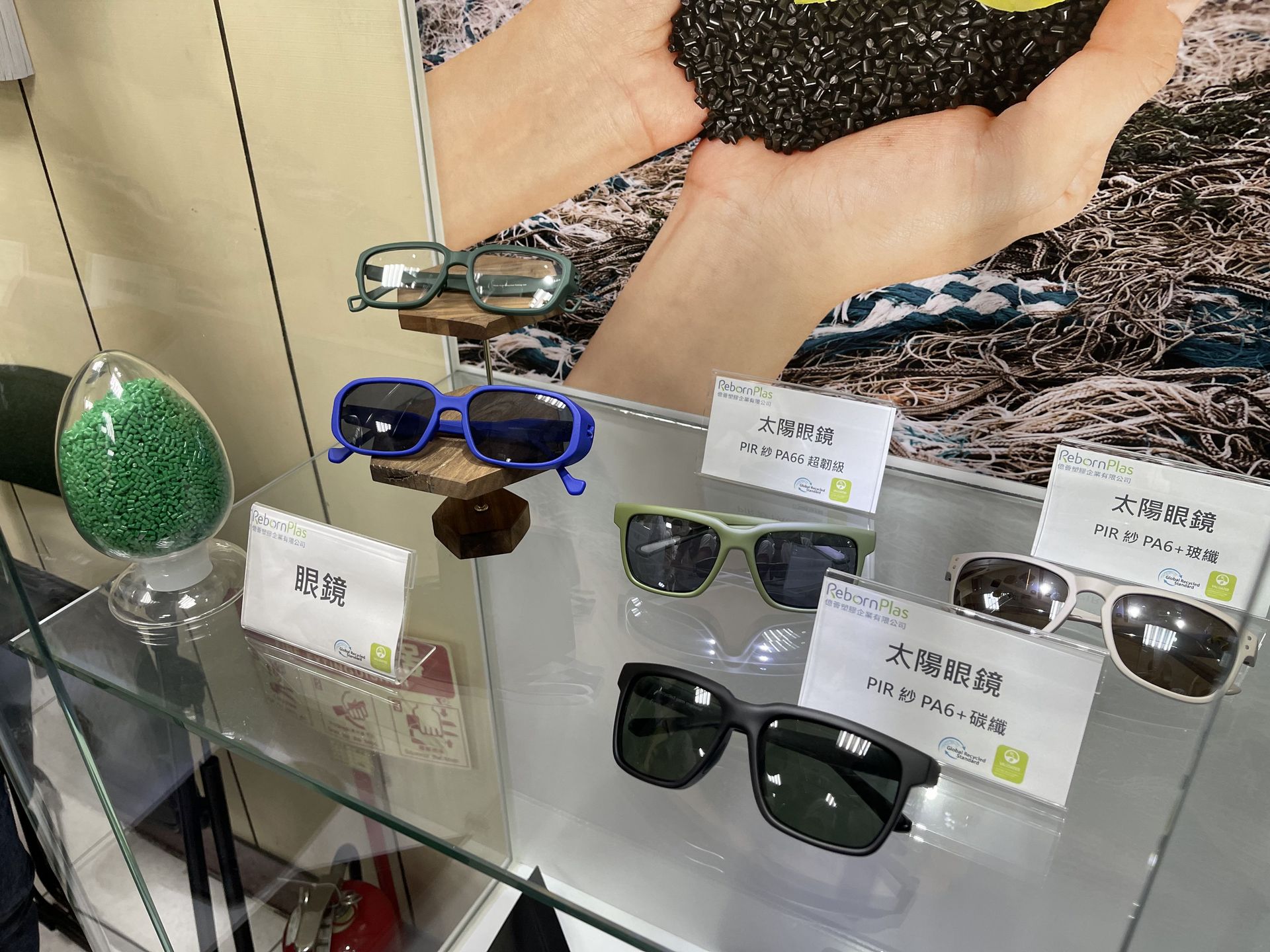
To truly understand the influence of waste and the potential of the circular economy in Taiwan, we investigated the public’s awareness and understanding by sending out online surveys. On the latter part, we further asked for their opinion on a company named RebornPlas and the concept of circular economy, which were both connected to our main focus on reducing environmental pollution.
Meanwhile, by including bilingual texts in the form, we ensured that our survey encompasses diverse groups within our local community, emphasizing that environmental responsibility is a shared responsibility for everyone, regardless of background.
Eventually, we collected 301 responses across age groups and professions. While the respondents were deeply concerned about marine pollution, there is a significant need for promoting the concept of the circular economy and composite products to protect our environment.
Survey Design:
The main purpose of designing this survey was to uncover the relationship between public perception and the practical realities of marine waste pollution while leading out the solution of the circular economy. Rather than simply collecting data, we aimed to build a narrative communication between the community’s current understanding and innovative industrial solutions, with the case study from RebornPlas to solve the environmental issues. Therefore, we divided the survey into five sections, collecting the respondents’ perception on different processes: first, identifying the problem, proposing specific examples, and finally, offering an overall possible solution concept.
Data Collection:
To ensure our findings were grounded in reality, we executed our data collection process through Google Forms. Our strategy focuses on two aspects: Accuracy and Accessibility.
Digital Outreach
The forms were all created and sent digitally. We utilized them through social media and the e-mail system in our school. The efficient process allows us to collect more responses in less time. At the same time, the borderless internet also contributes to spreading the form to a wider demographic across Taiwan.
Quality and Quantity
We collected 303 results as a result. To maintain the high quality of our research, we eventually collected 301 valid responses after we removed 2 responses that were irrelevant or contained nonsense data. The significant samples depict a snapshot of the public’s sentiment regarding marine waste and the circular economy in society.
Ethical Considerations
All data were collected anonymously. We notified the respondents before they started to fill out the forms, ensuring they were comfortable sharing their true opinions and experiences with our topic. Their honest answers could help us understand the real thoughts of the current society.
Respondents’ Information
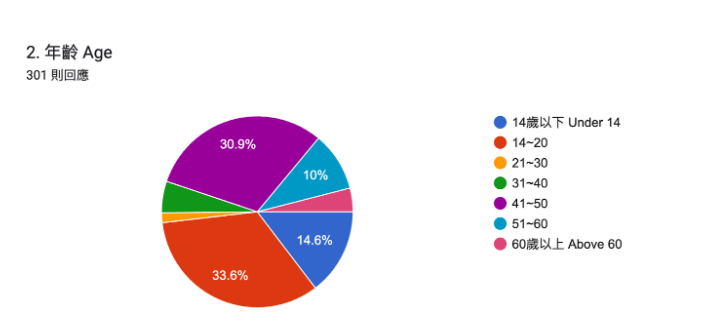
Our survey reached several boundaries, including people from different biological genders, ages, educational levels, and occupations. To achieve the goal of raising awareness about the issue of marine pollution and promoting the concept of the circular economy, it is vital to demonstrate that our findings were not limited to a specific demographic. More importantly, the data highlights the importance of collaboration within the community to achieve the mission of “Reborn” our marine environment through practical and collective actions.
The majority of the respondents are Female (68.1%), followed by Male (28.9%), and 3% who preferred not to say. Although our results show a higher engagement of female participants, the passion for marine pollution and the circular economy is not limited by gender. With nearly 30% of male participants, it ensures the data balances the representation of this form that reflects the general public opinion.
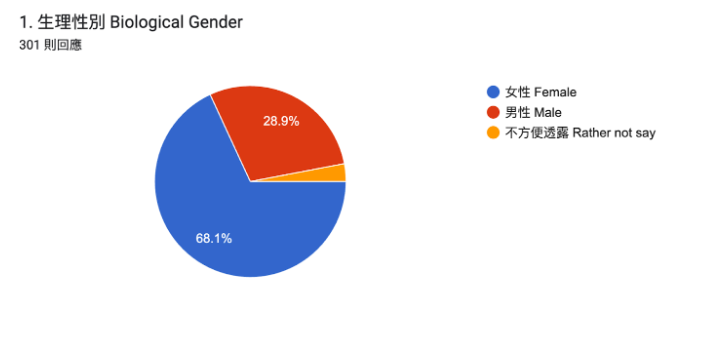
The majority of the respondents are Female (68.1%), followed by Male (28.9%), and 3% who preferred not to say. Although our results show a higher engagement of female participants, the passion for marine pollution and the circular economy is not limited by gender. With nearly 30% of male participants, it ensures the data balances the representation of this form that reflects the general public opinion.
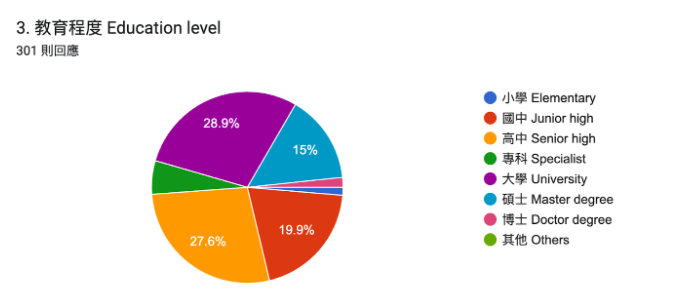
Different education levels are a potentially influential reason that impacts individual opinions and awareness. In our survey, we have the most respondents who have a university degree (28.9%). The following are: senior high school (27.6%), junior high school (19.9%), and master's degree (15%).
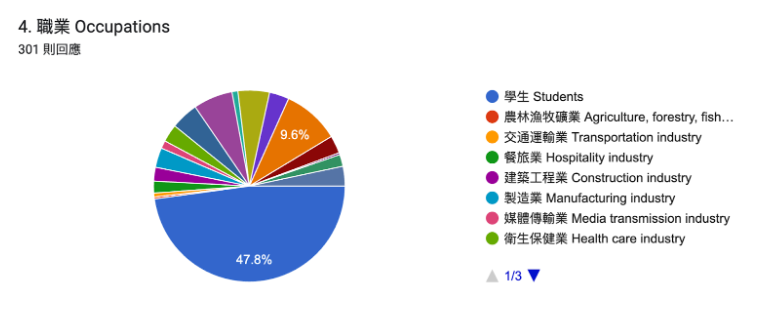
The data reveal that students were the largest group of respondents, accounting for 47.8%. Our data was collected through the school's email, which may be the direct reason for a larger number of student respondents. Meanwhile, it shows that students have a high willingness to participate in environmental issues and conservation. As they are the future decision maker, students were a vital part of our project’s purpose on promoting the economic model based on environmental protection. In addition, we also have respondents from more than 10 occupations, including family management (9.6%), cultural and educational institutions (6.5%), business (5.3%), etc., suggesting that our survey reached a diverse group of respondents in society. Although they may have different opinions on the same topic, they acknowledged the importance of marine pollution as a shared community mission.
The data reveal that students were the largest group of respondents, accounting for 47.8%. Our data was collected through the school's email, which may be the direct reason for a larger number of student respondents. Meanwhile, it shows that students have a high willingness to participate in environmental issues and conservation. As they are the future decision maker, students were a vital part of our project’s purpose on promoting the economic model based on environmental protection. In addition, we also have respondents from more than 10 occupations, including family management (9.6%), cultural and educational institutions (6.5%), business (5.3%), etc., suggesting that our survey reached a diverse group of respondents in society. Although they may have different opinions on the same topic, they acknowledged the importance of marine pollution as a shared community mission.
The public’s awareness of the marine environment and waste recycling
Marine pollution is now a global issue. According to our research, we discovered that one of the main reasons is marine debris, meaning the human waste that is littered into the ocean and causes pollution. Therefore, in this section, we investigated the respondents’ awareness of marine pollution and also their awareness of marine waste with a specific scale. While marine pollution is a well-known global crisis, our surveys show thatmost people’s understanding remains at a surface level, while focusing primarily on "visible debris." However, the data also reveals a high level of public concern. In our CyberFair project, we aren't just identifying a problem; instead, we are listening to the existing public awareness for change while providing the necessary educational bridge.
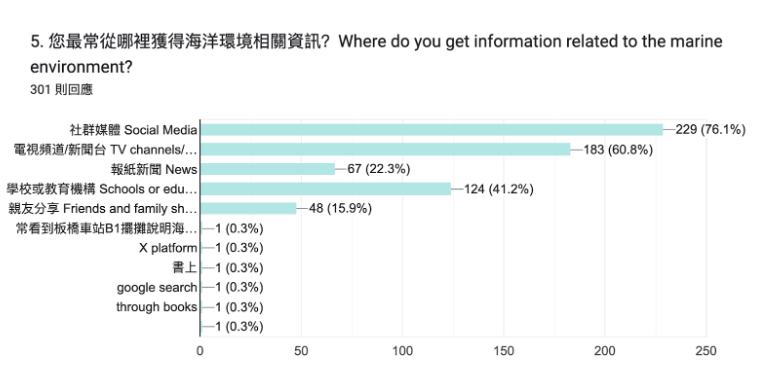
The data reveal that students were the largest group of respondents, accounting for 47.8%. Our data was collected through the school's email, which may be the direct reason for a larger number of student respondents. Meanwhile, it shows that students have a high willingness to participate in environmental issues and conservation. As they are the future decision maker, students were a vital part of our project’s purpose on promoting the economic model based on environmental protection. In addition, we also have respondents from more than 10 occupations, including family management (9.6%), cultural and educational institutions (6.5%), business (5.3%), etc., suggesting that our survey reached a diverse group of respondents in society. Although they may have different opinions on the same topic, they acknowledged the importance of marine pollution as a shared community mission.
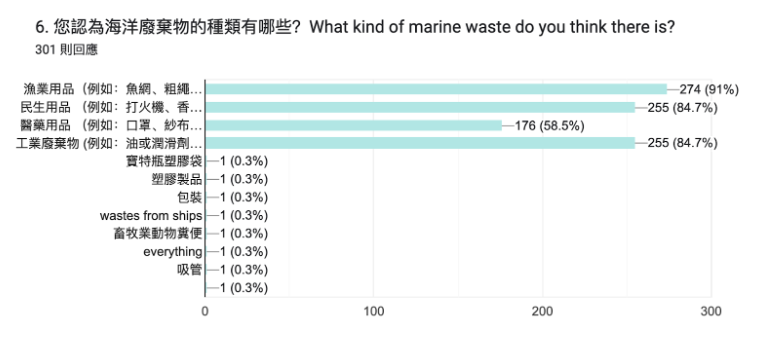
All of the options we provided were defined as marine waste according to our research. This question was asked to investigate people’s definition of “marine waste”, and the result presents a significant "visibility bias" in public perception. According to our survey, most respondents, reaching 91%, chose fishing equipment as the major marine waste, while only 58.5% of them recognized medical supplies. The discrepancy suggests that public awareness is often tied to the physical size and the perceived industrial nature of the waste. Conversely, the public often pays less attention to smaller waste, such as masks, as a threat to marine pollution. While our project uses RebornPlas, which recycles fishing nets, as an example of the circular economy, we are also aiming to educate and increase awareness of the marine pollution problems among the public. By defining the insufficient and hidden pollutants, we can foster a more comprehensive understanding of why the circular economy is necessary for all types of plastic waste.
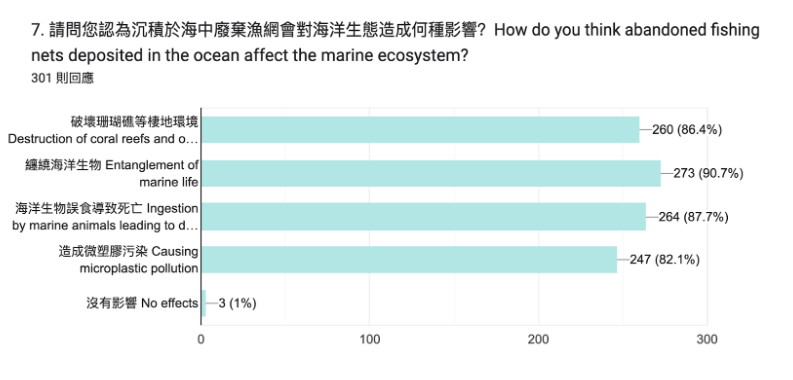
All of the options above are negative influences caused by depositing the fishing nets. As a result, each option has been chosen by more than 80% respondents and only 1% believed there was no impact, showing the high public awareness about fishing nets as a marine pollution. Again, this highlights the value of the mission of our project – promoting the problem of marine pollution and further promoting the solution by providing an economic system model from RebornPlas.
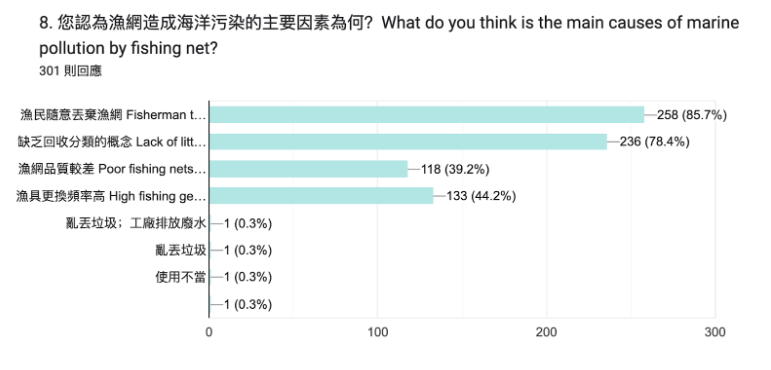
Understanding the cause of the problem is essential for developing effective solutions. In our survey, 85.7% of respondents believe the main cause was “Fishermen throw old fishing nets in the ocean,” while 78.4% think it because the “Lack of litter classification.” The data highlights the urgent need for organizations on the system of industrial recycling, specifically on fishing nets, as they are also one of the major causes of marine pollution.
About RebornPlas
As RebornPlas is one of the solutions and the new economy model for solving the problem of marine pollution as a company we found in Taiwan, we decided to survey the public’s opinion on these kinds of industrial who are participating in reducing pollution. By analyzing the public’s understanding of RebornPlas, which exists as an example company on the circular economy related to recycling materials, we could consider diverse aspects and solutions while promoting similar concepts that focus on sustainable development.
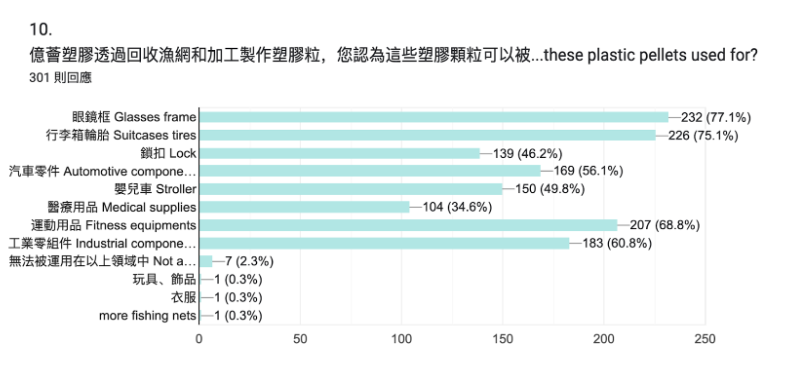
The results indicate a high level of public acceptance of the products made from recycled plastic pellets. For instance, glasses frames (77.1%), suitcase tires (75.1%), fitness equipment (68.8%), and industrial components (60.8%) were selected by over 60%, highlighting the confidence shown by the public. It breaks the stereotype that upcycling products have less marketing and potential, and further demonstrates the value for wider promotion of the products.
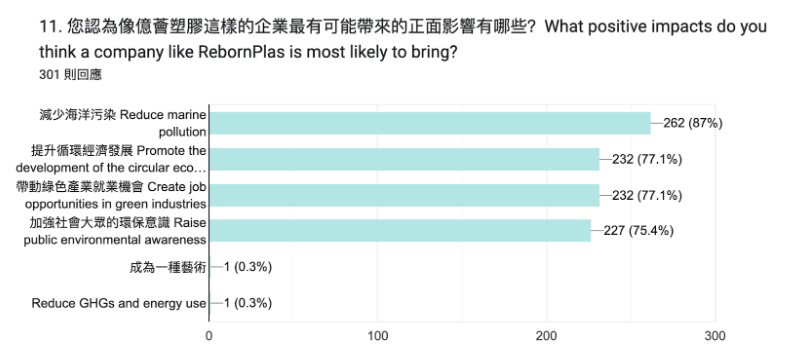
The four options were all chosen by more than 75% of the participants. While 87% of the respondents expect RebornPlas to reduce marine pollution, 77.1% hopes it promotes the development of the circular economy and creates job opportunities in green industries. The expectations show how the public views RebornPlas as a multifunctional social role. While the company reduces environmental pollution, it is also believed to be a model of a new economic system. The affirmative gives businesses important roles in protecting the environment for sustainable development.
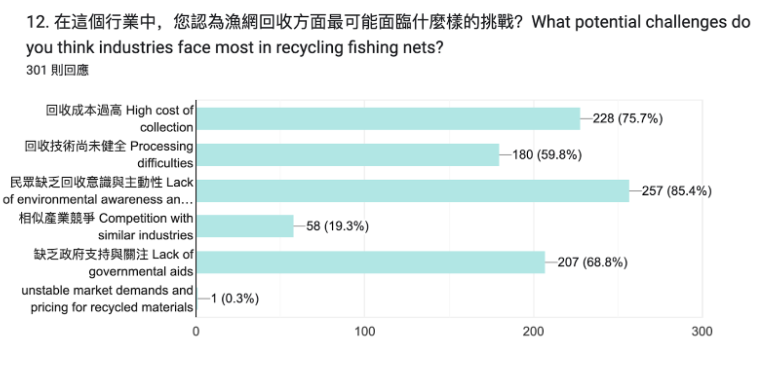
According to the statistics, 85.4% of the respondents believe that the major challenge in recycling fishing nets is the lack of environmental awareness, even higher than the high cost of collection (75.7%). The results show that although the system of recycling has to be developed, the main obstacle is the lack of awareness and support from the public. Therefore, it emphasizes the vital role and value of our project, which is to promote environmental awareness on marine pollution and further propose the concept of the circular economy.
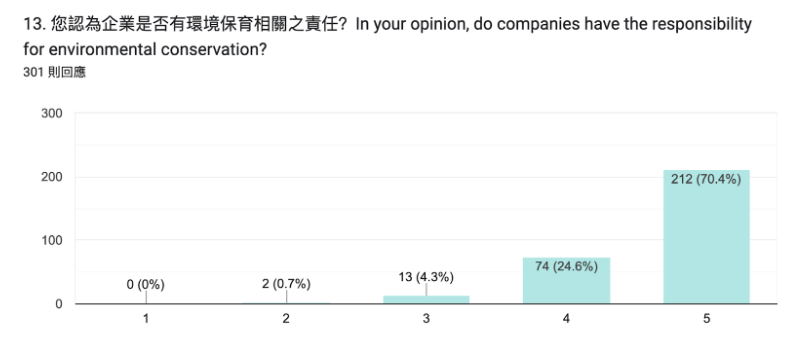
70.4% of the respondents gave full marks as a 5, and 24.6% gave a 4, believing that companies have the responsibility to conserve the environment. The data presents how the public was highly expecting “responsible consumption and production.” Therefore, as a company that takes the initiative of reducing marine pollution, RebornPlas would probably be a company with higher brand loyalty and moral equity in the minds of consumers.
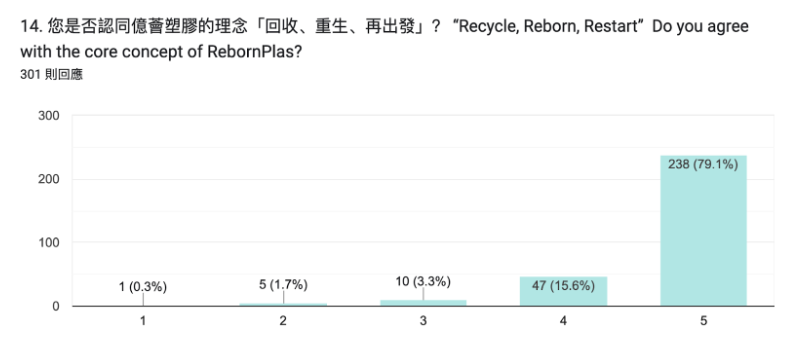
According to the statistics, 79.1% of the participants fully agree (who chose 5) with the concept of “Recycle, Reborn, Restart.” The slogan is not a description, but also a philosophy of responsibility to the environment. The high affirmative emphasizes the public’s acceptation with the new way of consumption to protect the environment, which points out the potential of the promotion in our project.
Consumers’ behavior on recycled and eco-friendly products
Consumers’ attitudes are the key to whether our promotion of the economy-friendly products would succeed. Our analysis shows a clear willingness to support eco-friendly products, yet there were still barriers, mostly related to public accessibility or doubts about the products’ quality. Ultimately, listening to these public voices is the key to making recycled products more generalized. By understanding these specific common behaviors, we can better simulate actual social situations and propose strategies that move beyond awareness—effectively turning "maybe" into a definitive "yes" for local and global communities.
Compared to the previous question of “How important do you think solving marine waste is?”, receiving over 96% of respondents believing solving the marine pollution problem is important, only 15.6% of the participants always buy products made out of recycled plastic or composite materials, and 55.6% of them sometimes, 27.6% rarely. The data shows that products made from recycled materials have not yet become a significant part of the public’s daily life. Although more than half of the respondents have bought the products, most of them are still in the process of “sometimes” doing so. The data shows that the penetration rate of the products still requires improvement. For both our project and RebornPlas, it showed the huge potential for promotion for these kinds of products. The comparison highlights how the public lacks sufficient options for purchasing products, rather than prioritizing the concept of protecting the marine environment.
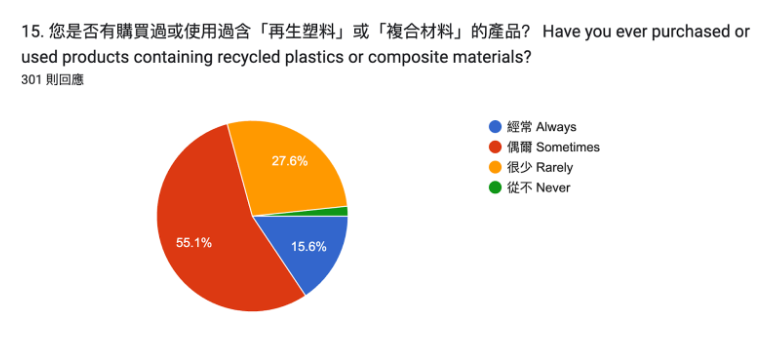
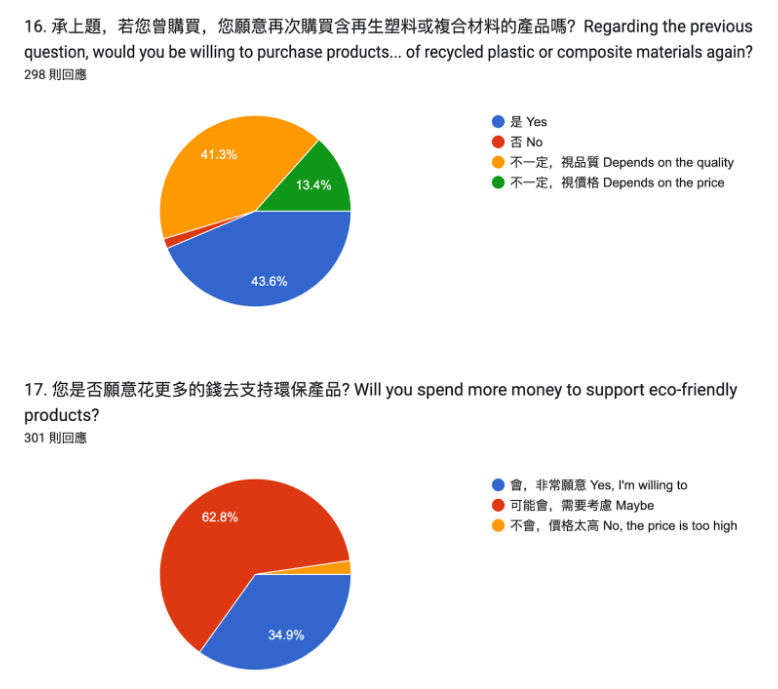
According to the data of question 17, despite the participants who were certain to purchase the green products (43.6%), the main reason impacting people to buy them was the quality (41.8%). Compared to the people who focused on prices more (13.4%), the public seemed to take the quality of the products more seriously. Meanwhile, in question 18, the respondents were willing to buy products even if the price was higher, while 62.8% of them required consideration.
Under the condition of reinforcing the quality of the composite materials or recycled plastic, even if the price may be higher, the consumer would probably be willing to purchase the products. The phenomenon highlights the public expectations for the quality instead of the prices, which creates more possibilities for the development of recycled materials. It also encourages companies like RebornPlas, which are willing to pay efforts into a similar industry that focuses on environmental protection rather than economic profits.
The concept of the circular economy
We brought up the concept of the circular economy system in the last section. The questions helped us to know the public’s beliefs on the challenges and the development of this kind of industry. Their point of view allows us to make more considerations while providing more reasonable solutions to the local community.
To bridge the gap between local action and global goals, we concluded the survey by asking respondents to align our project with the SDGs, which was a way to show that a Taiwanese company’s innovation can be a possible solution for a worldwide issue. By linking RebornPlas's circular economy model with the SDGs, we fostered a bidirectional communication — educating the public while drawing inspiration from their vision for a sustainable future.
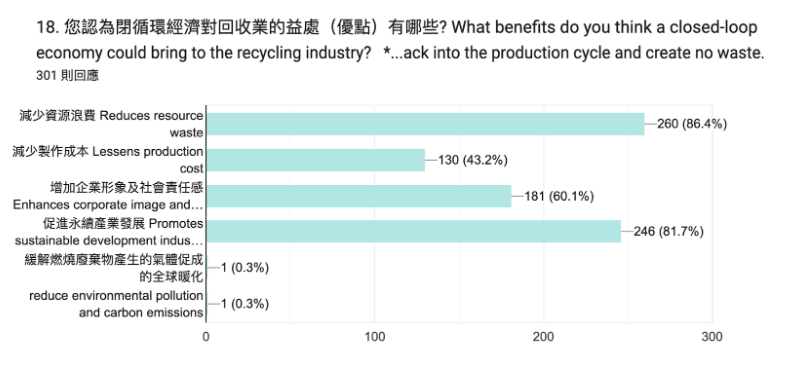
The data shows that 86.4% of the participants believed a closed-loop economy, a way to fullfill circular economy, is beneficial for reducing resource waste. 81.7% of the respondents suggested that the economic system promotes sustainable industry, and 60.1% said that it could enhance the corporate image and social responsibility of businesses. The statistic reflects how public expectations on the circular economy have expanded from personal environmental awareness to industry responsibilities. It demonstrated RebornPlas’s action of putting nylon scraps and discarded fishing nets back into the production chain perfectly aligns with public expectations for the modern industry of reducing waste to protect the environment.
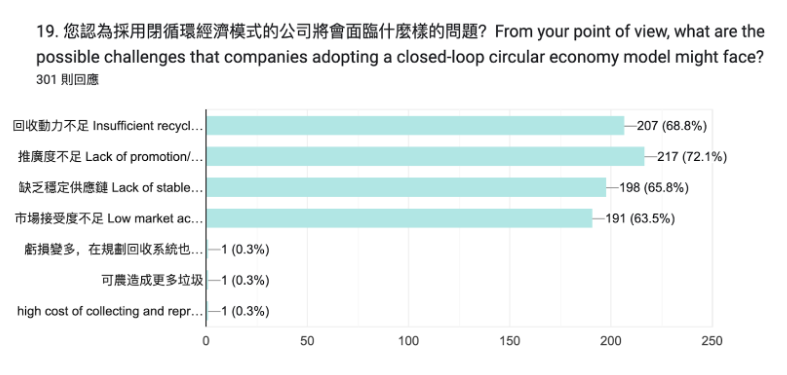
In the survey, 72.1% believed the challenges of business who promotes closed-loop economy would be the lack of promotion/awareness, 68.8%suggested insufficient recycling motivation, 65.8% stated the lack of a stable supply chain, and last, 63.5% said low market acceptance. This question echoes question 12, “Do companies have the responsibility for environmental conservation?”, when we believed that although general recycled instury techinque could be improved, the most important aspect is awareness and support from the public. To protect our environment by the model of the circular economy, especially the proposed closed-loop economy presented by RebornPlas, the wider promotion of the recycled and upcycled business. By indicating RebornPlas’s recycling on fishing nets, our project is trying to solve the conscious of the lack of promotion. This question also emphasizes the importance of unity, when protecting the environment with the economy is not just a business development, but requires promotion like our project, and also public support and acceptance.
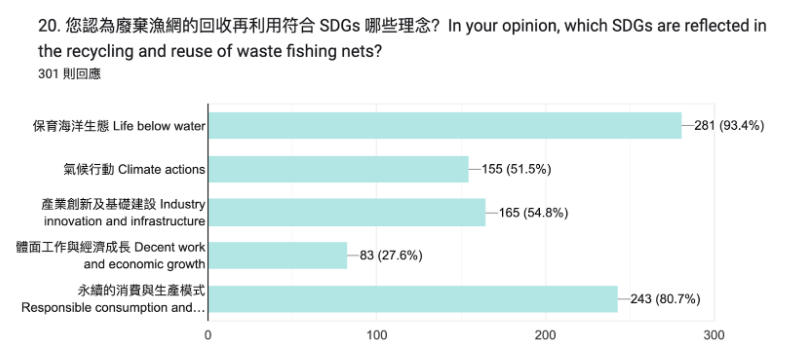
In the last question of our survey, we asked the respondents about their opinion on choosing the Sustainable Development Goals (SDGs) that achieve the concept of recycling and reuse of the fishing nets in the products. 93.4% of the respondents chose SDG 14: Life below water, and 80.7% of SDG 12: Responsible consumption and production are the twomajor options chosen by the respondents, reaching more than 80%. Most of the respondents view the recycling of fishing nets as a global consensus instead of simple beach cleaning. Moreover, the attachment of great importance to SDGs 12 and 14 highlights how RebornPlas’s concept of “Recycle, Reborn, Restart” has gradually transformed “local community acts” into “global society value indicator.”